
What to do
What to do in Pacasmayo
An old port with a wooden pier, a nineteenth century centre, a beach 130 metres from the hostel and steady wind in the afternoon. Here are the outings you can do on foot from the door and the ones within two hours of the town.
On foot from the hostel
The centre and the town market
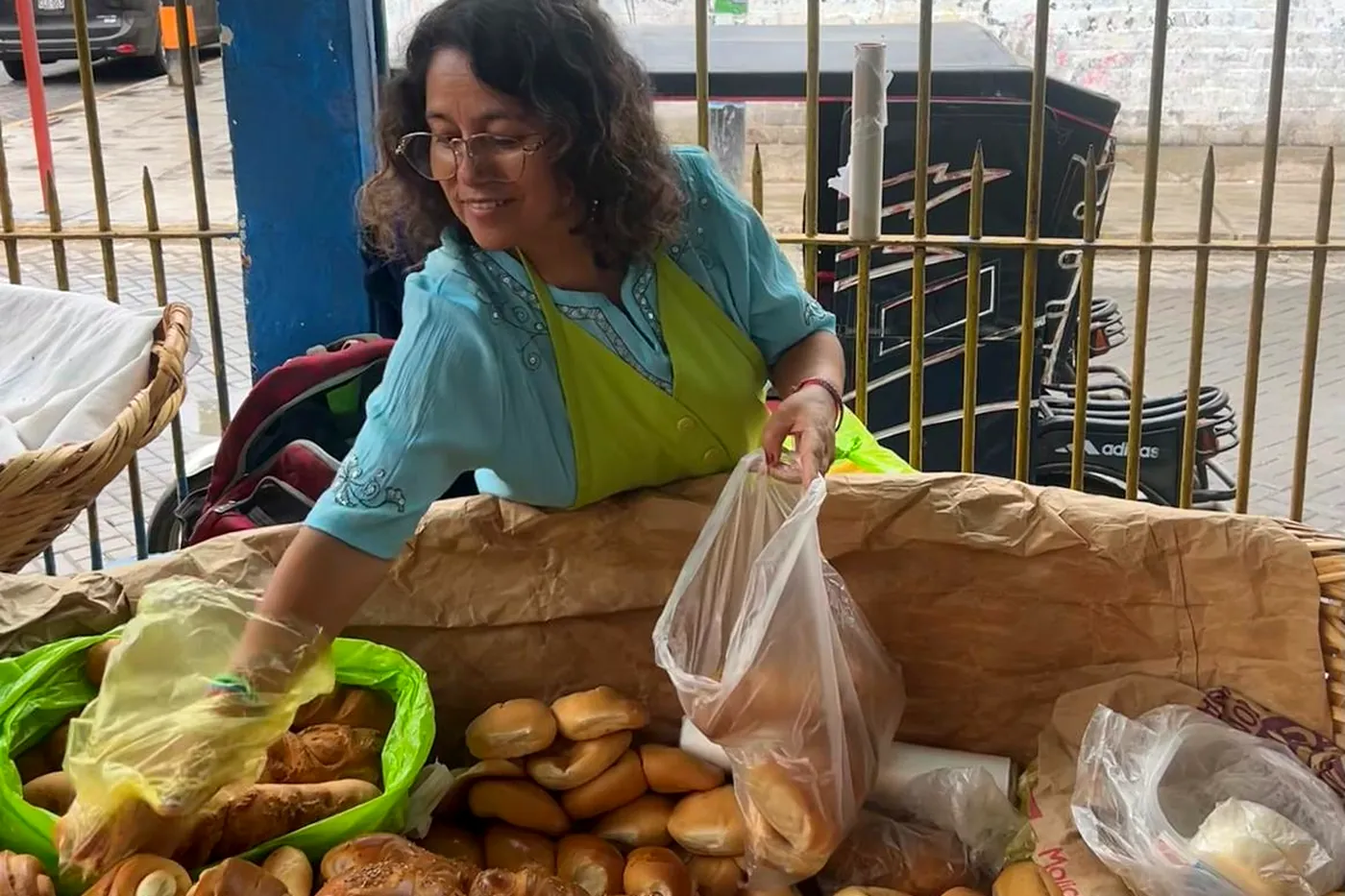
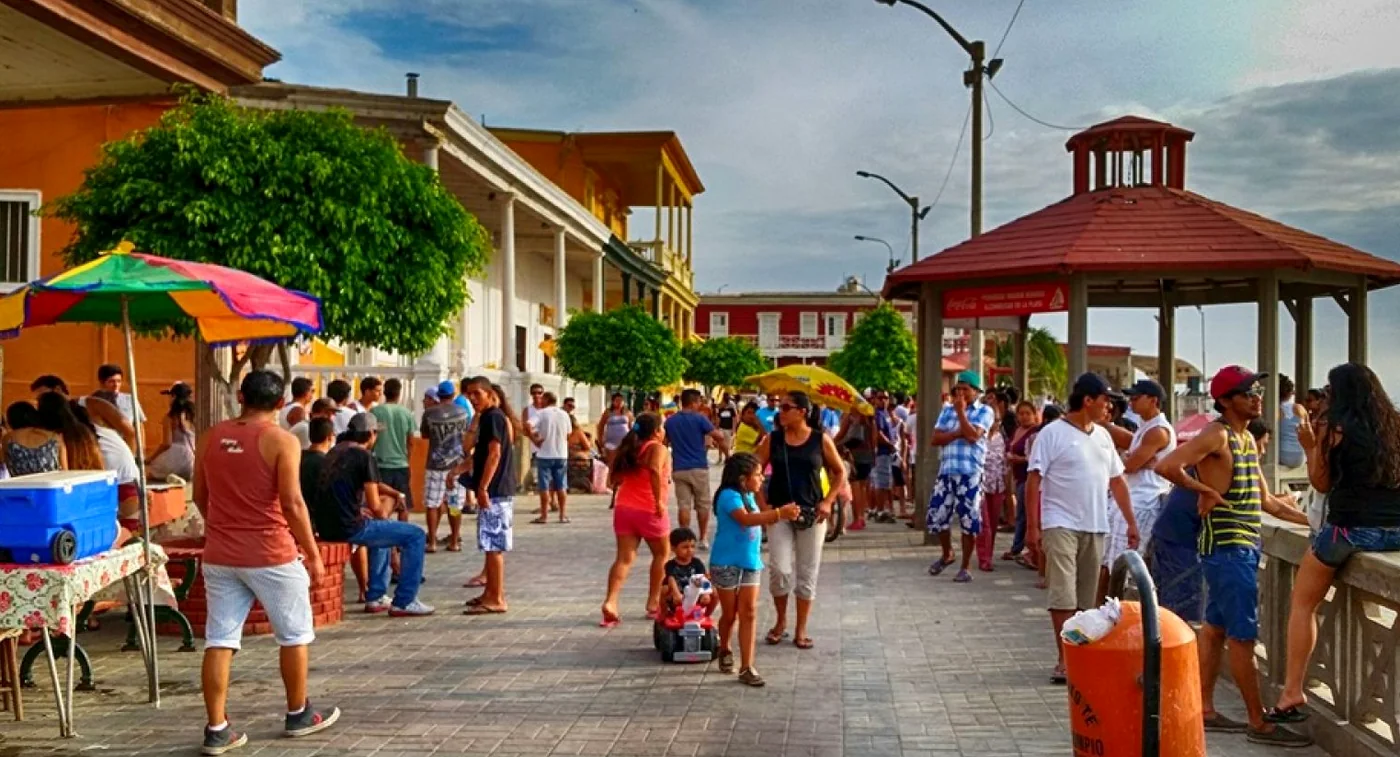
Pacasmayo still has the houses of the sugar and cotton port years, with wooden balconies and coloured façades. The market is a block away: fruit, fresh bread and the stalls where the town has breakfast.
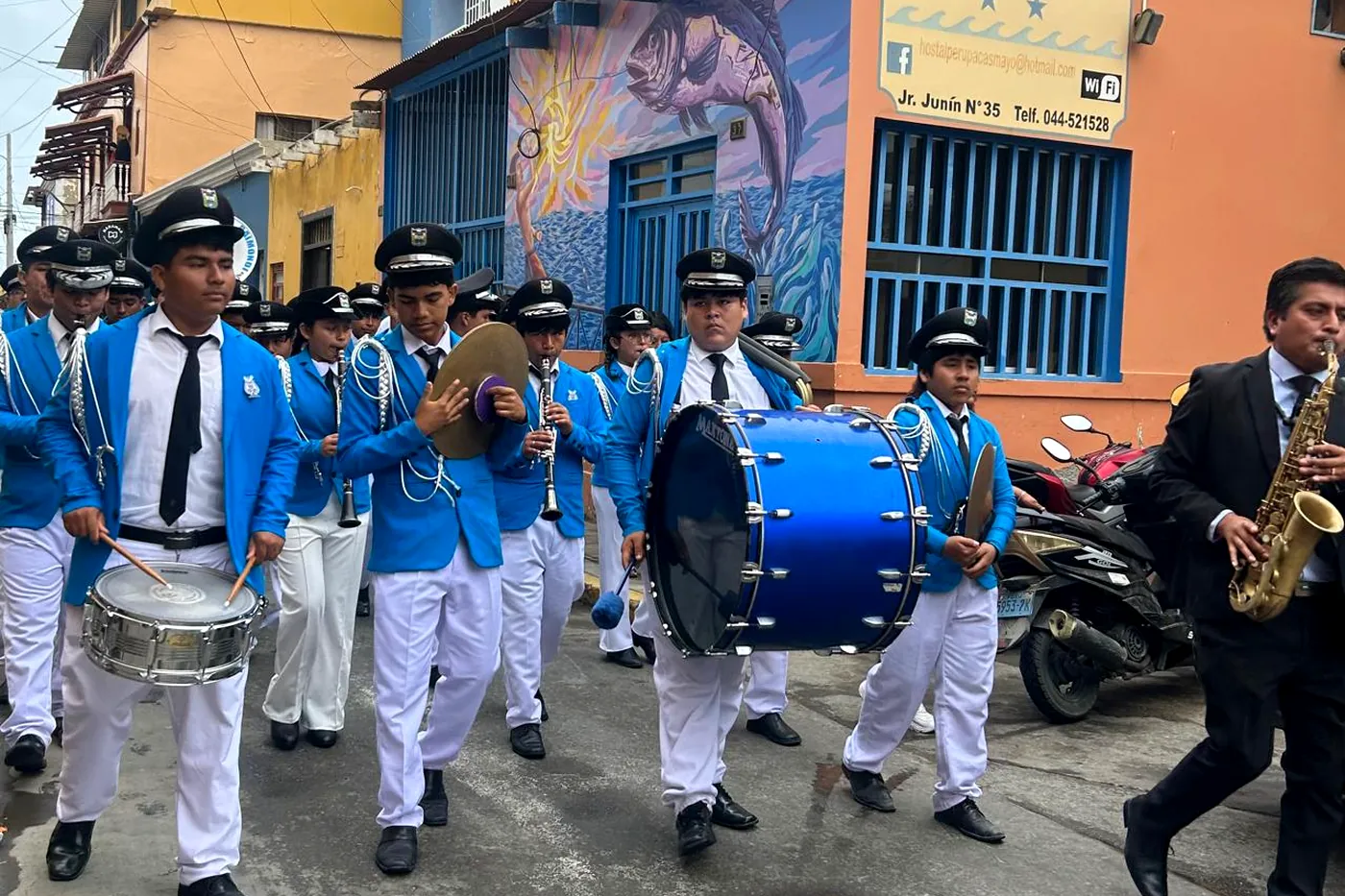
Any Tuesday a school band may turn up playing in the street. No calendar announces it, and it is one of the things people remember about the town.
130 metres away
The town beach
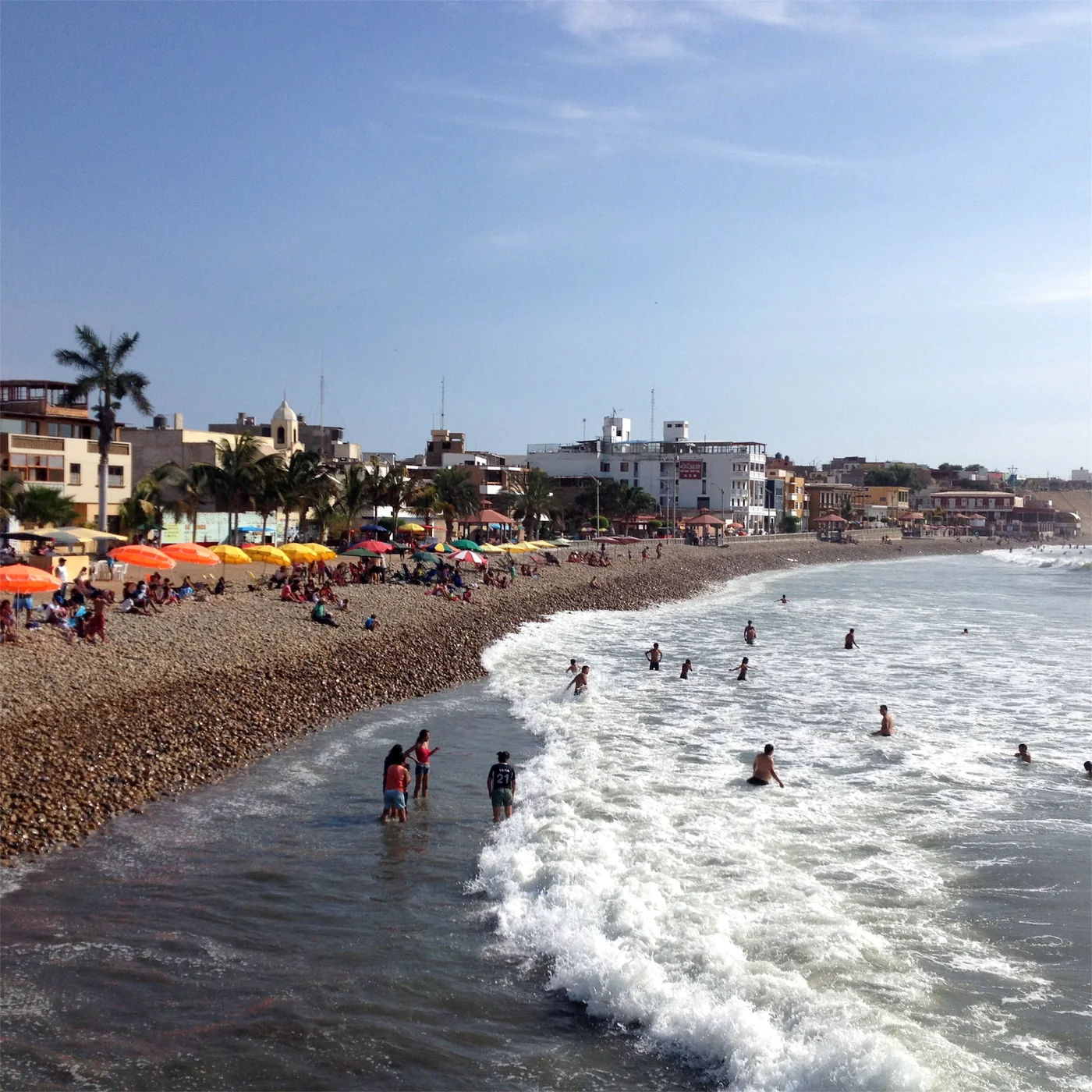
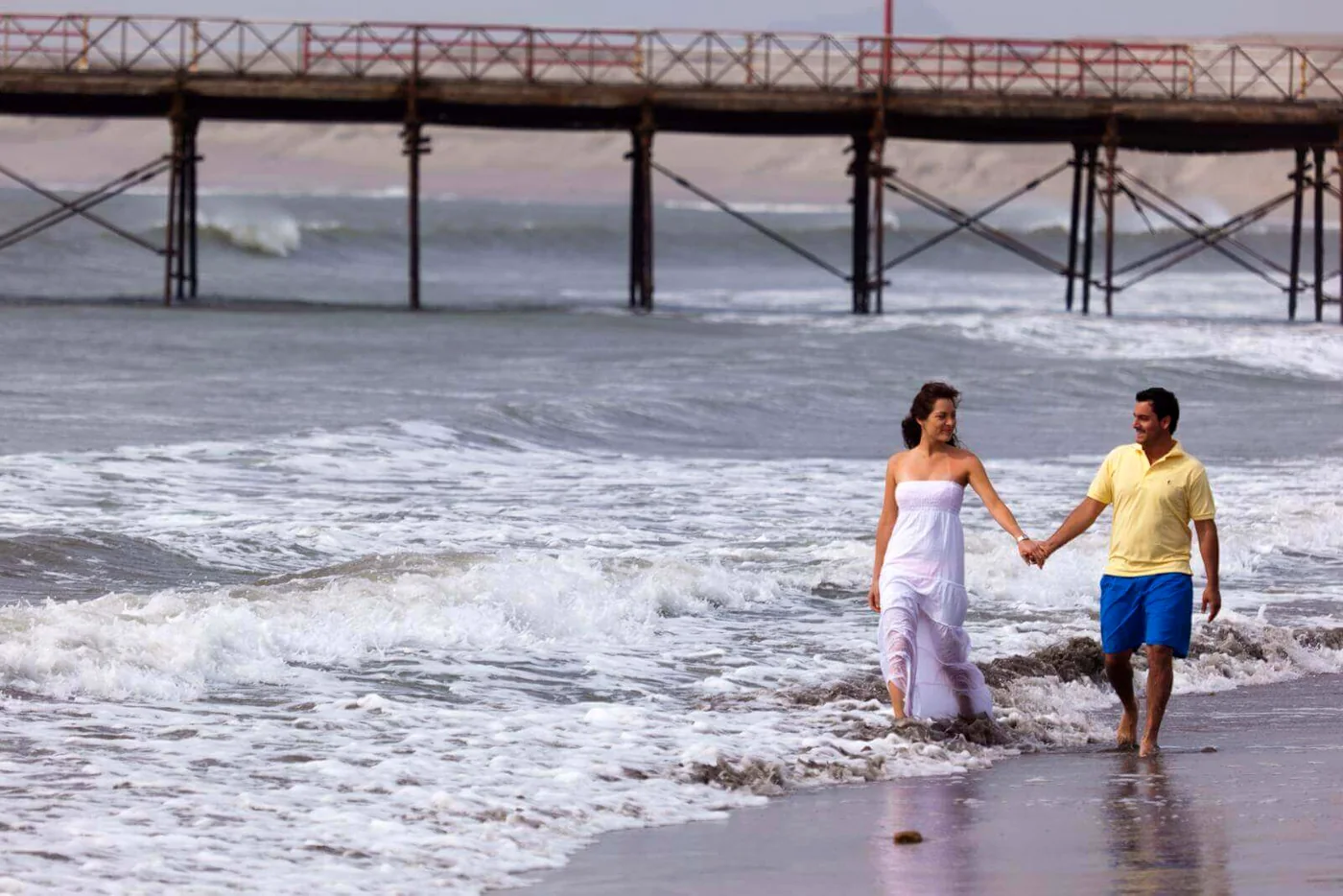
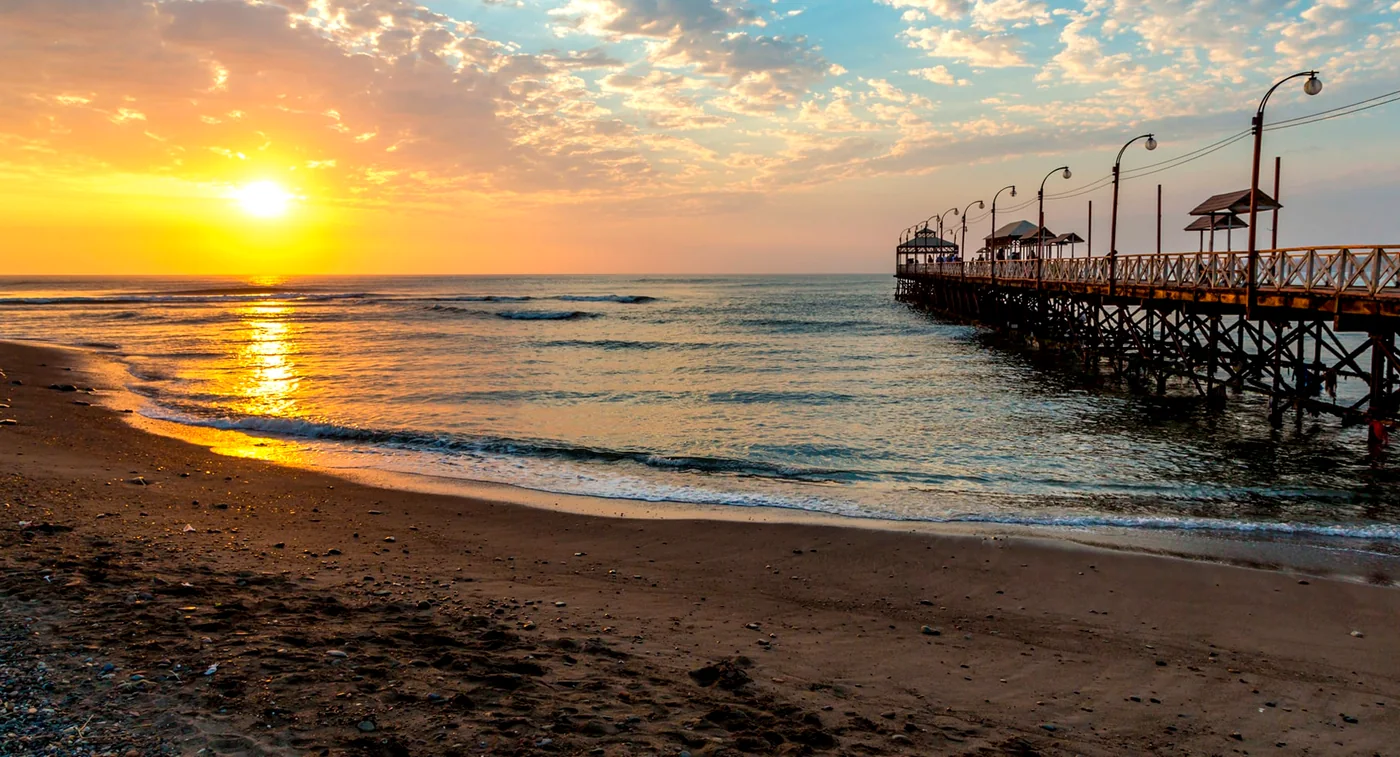
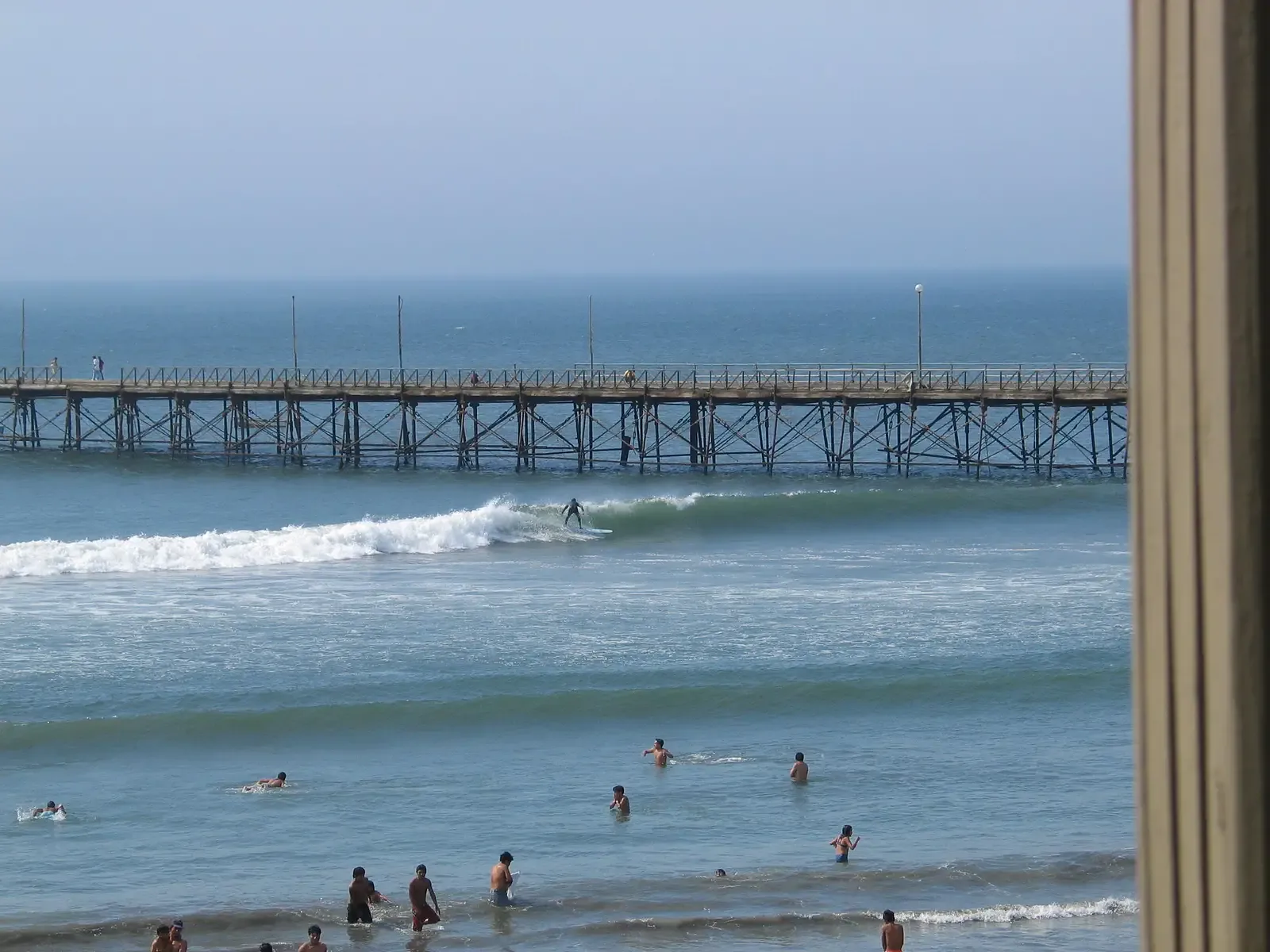
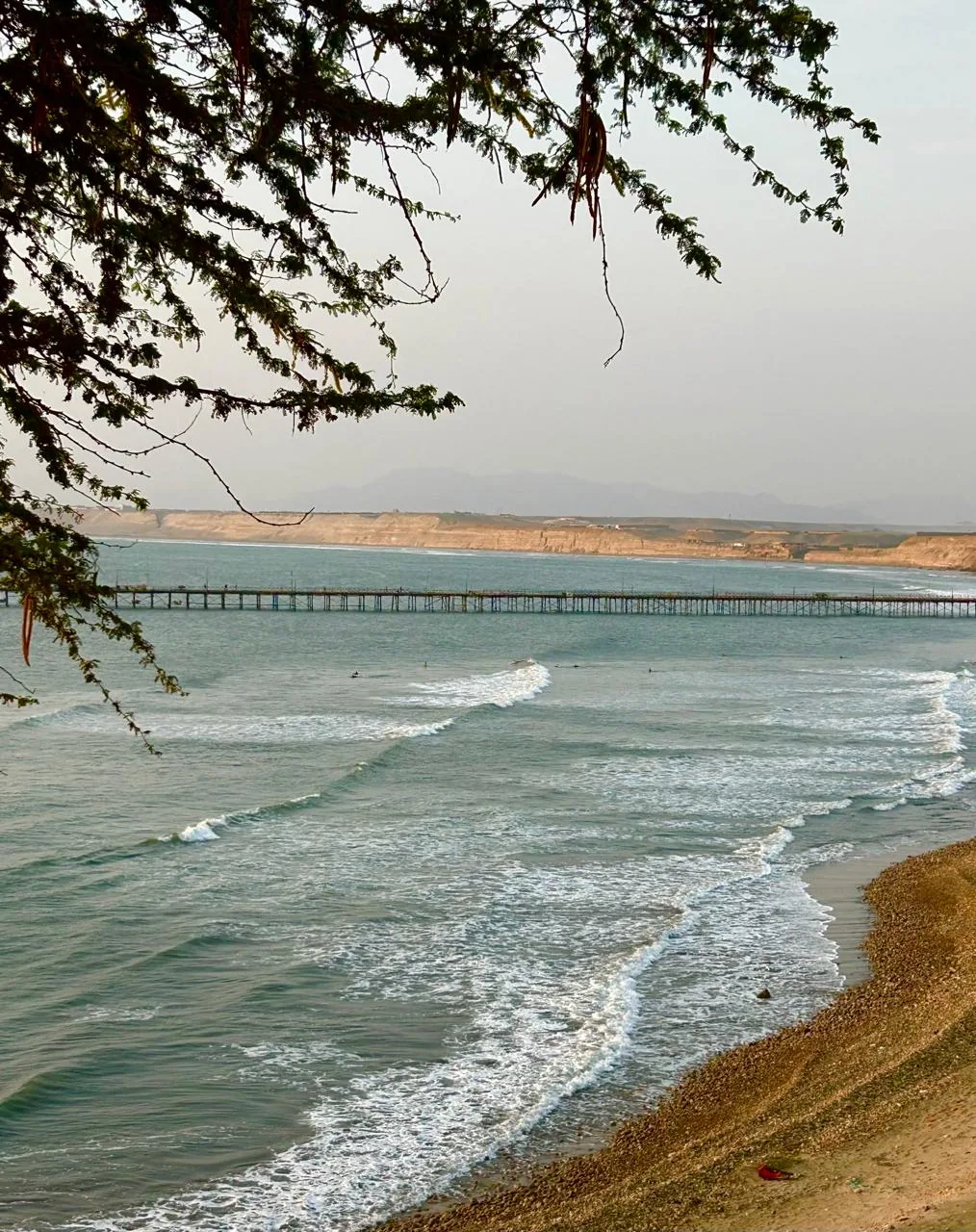
You leave the hostel, walk a block and a half and you are on the sand. It is the town beach: people swimming in the morning, the wooden pier at the end and the fishermen coming back with the day's catch.
The water is the north Pacific, milder than in Lima, and the bay breaks the swell before the shore. In the afternoon the wind comes in, which is when the beach is good for watching and less so for swimming.
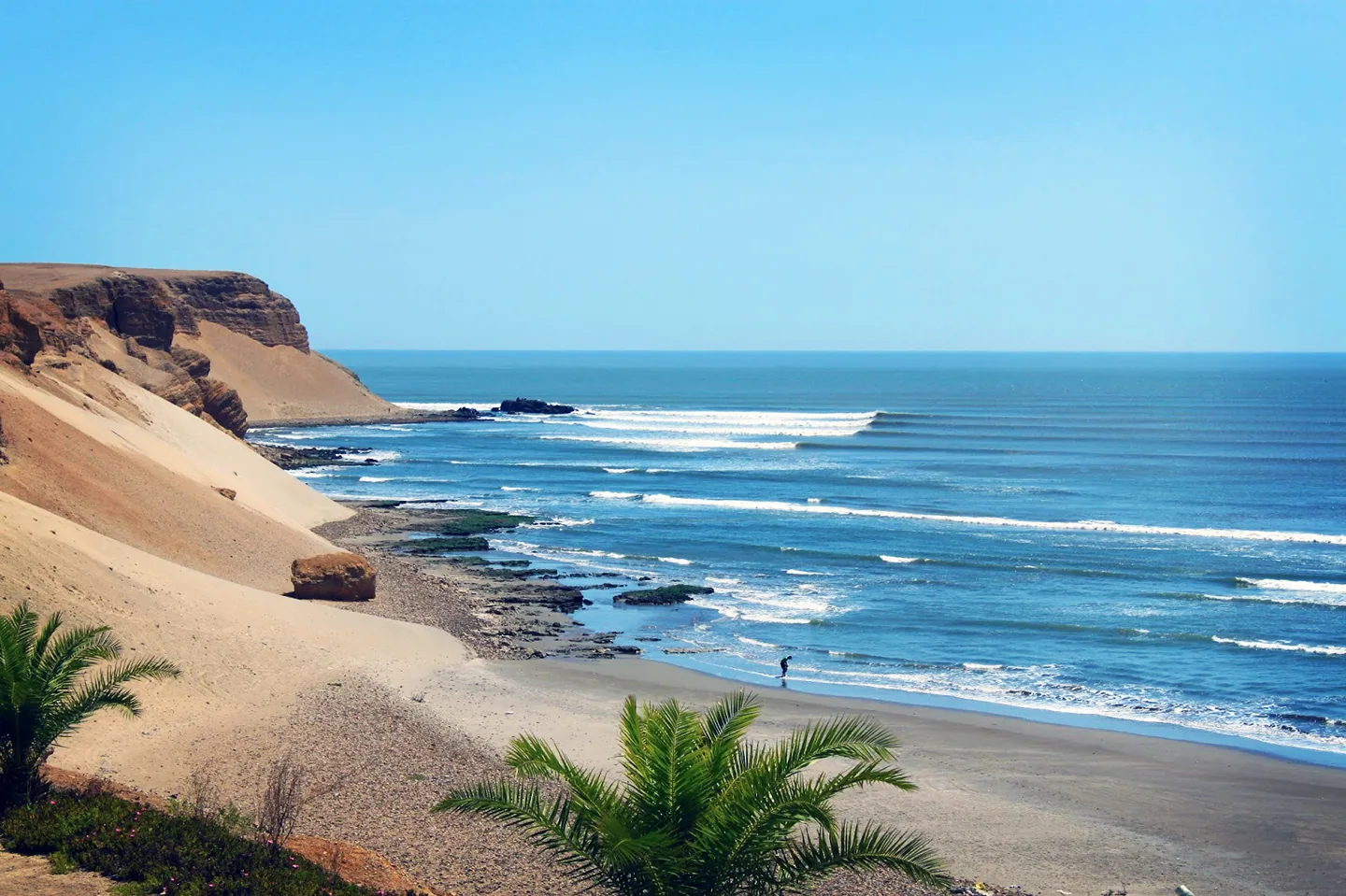
On this same beach breaks Point Malecón, the town wave
From the hostel to the point
The new seafront and the skatepark
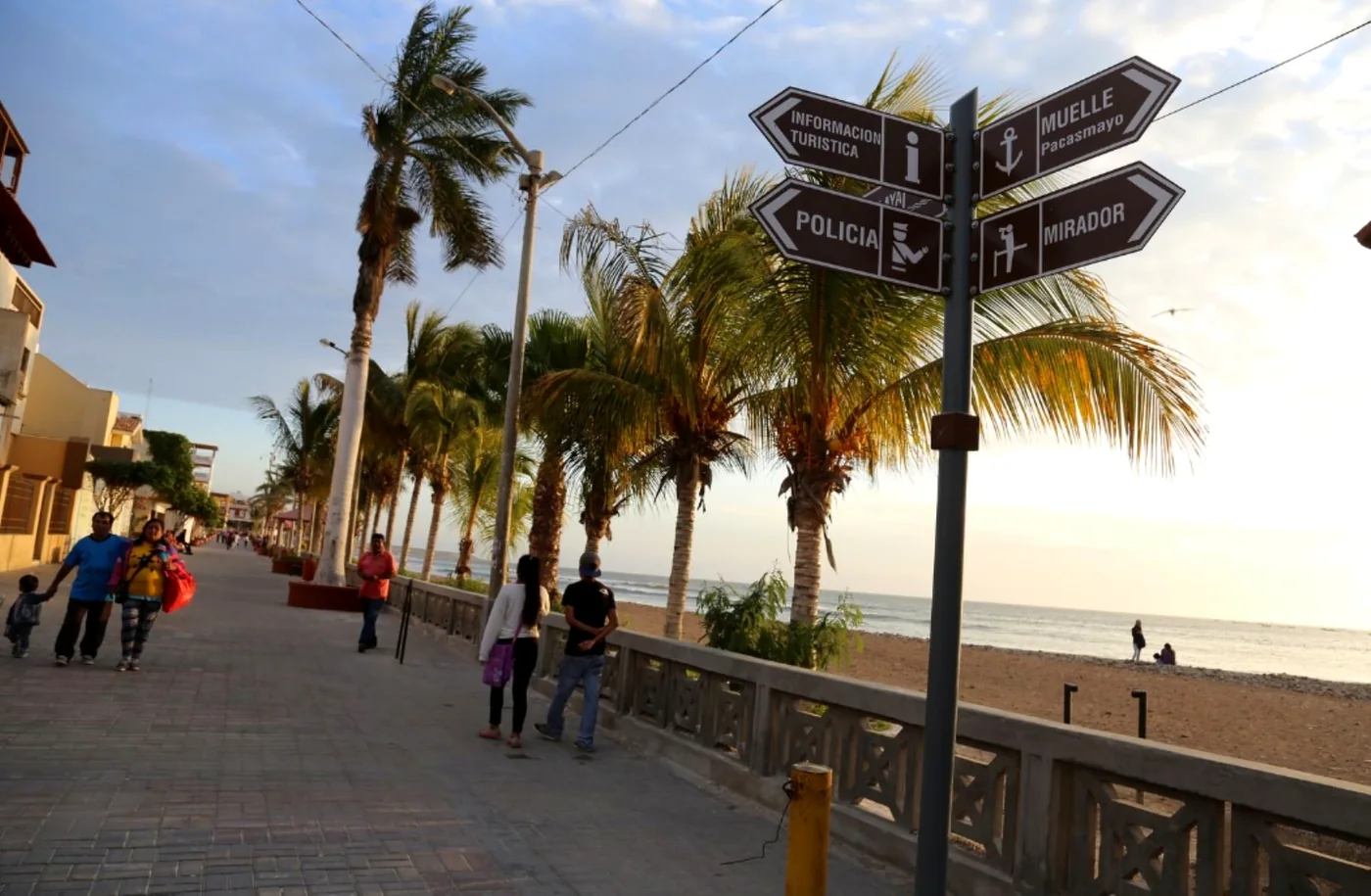
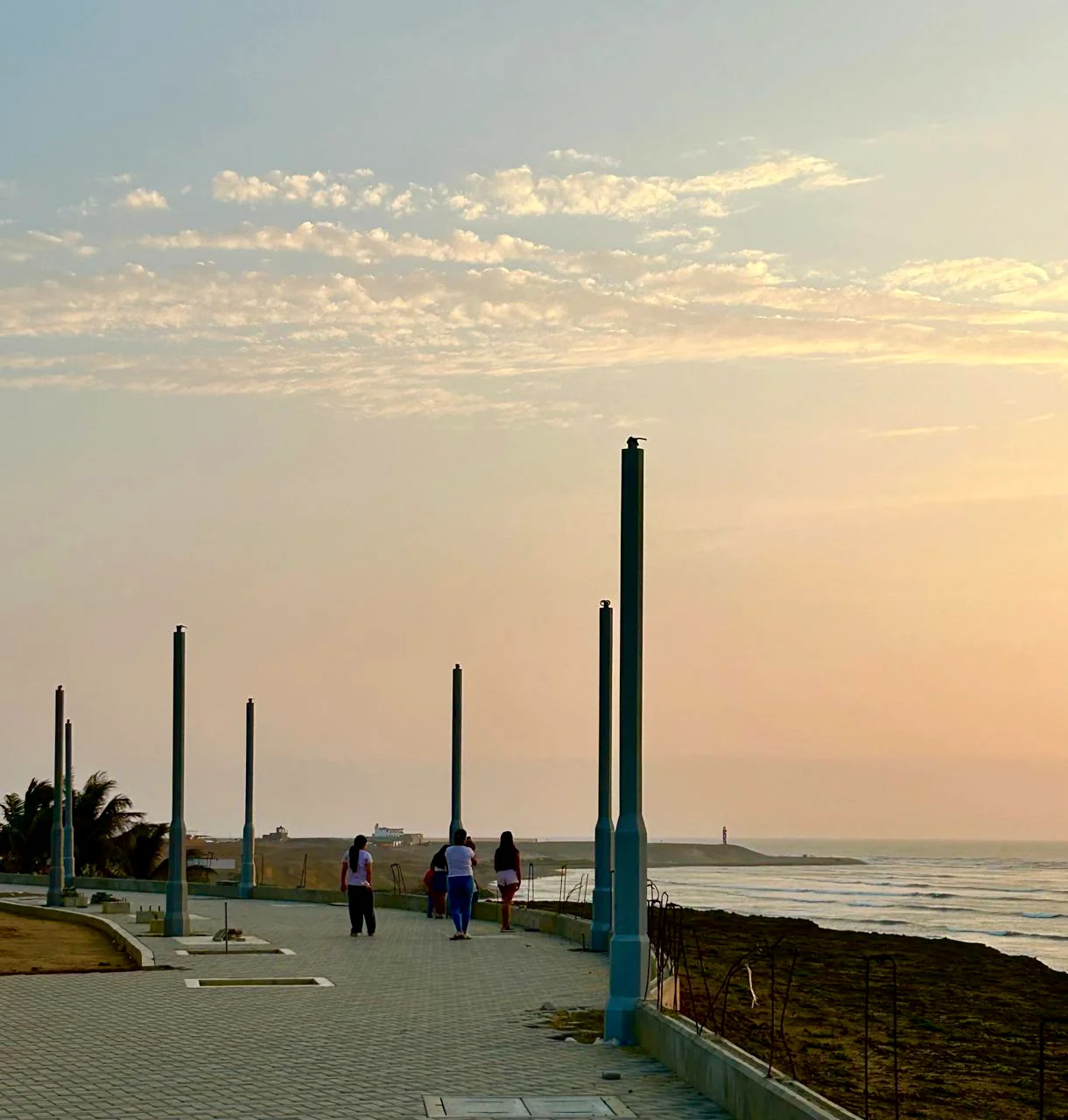
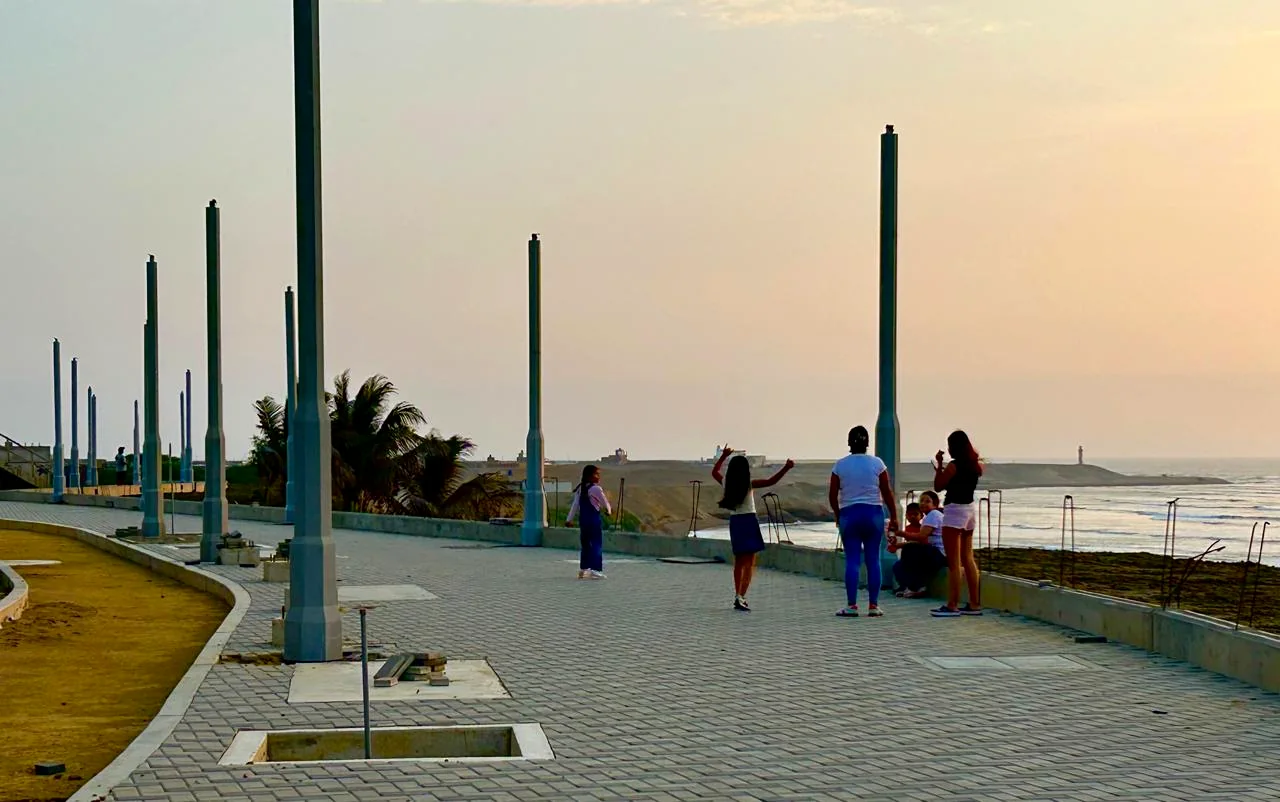
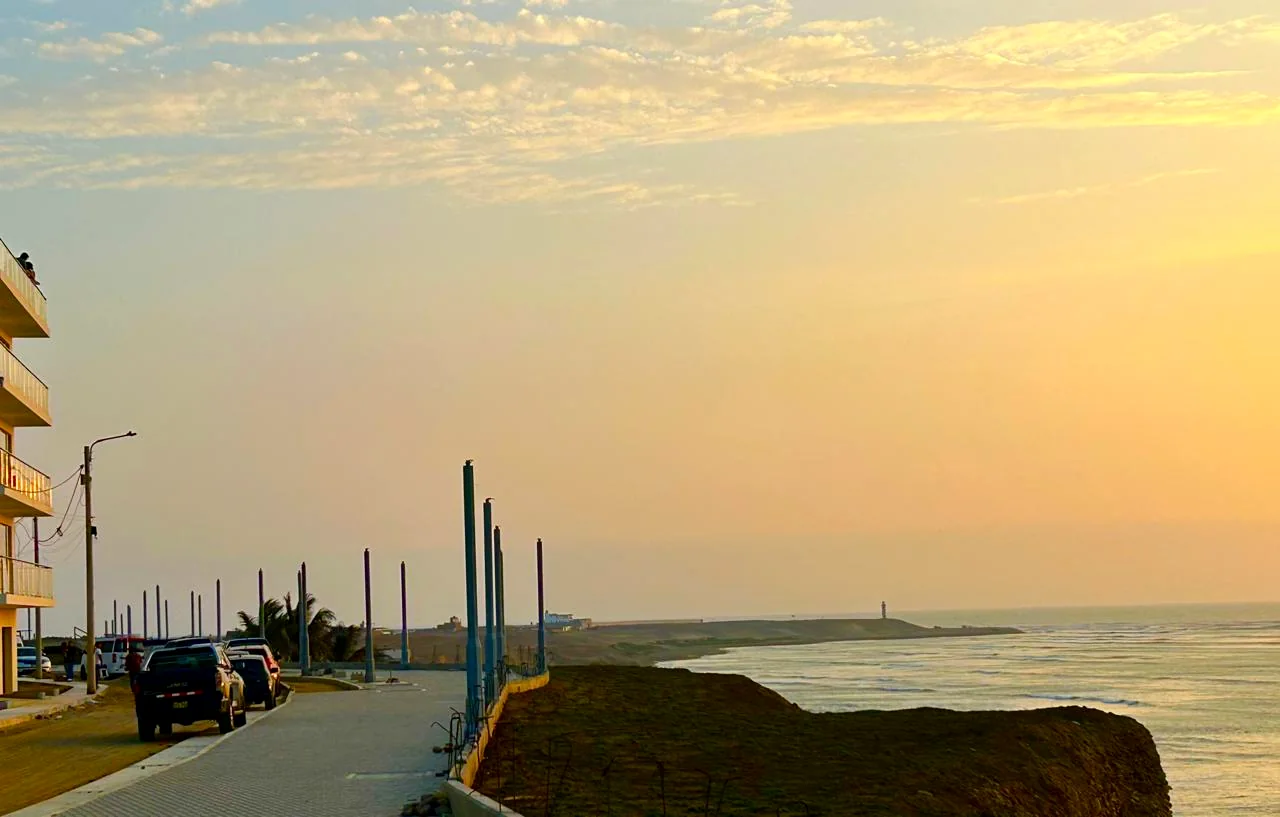
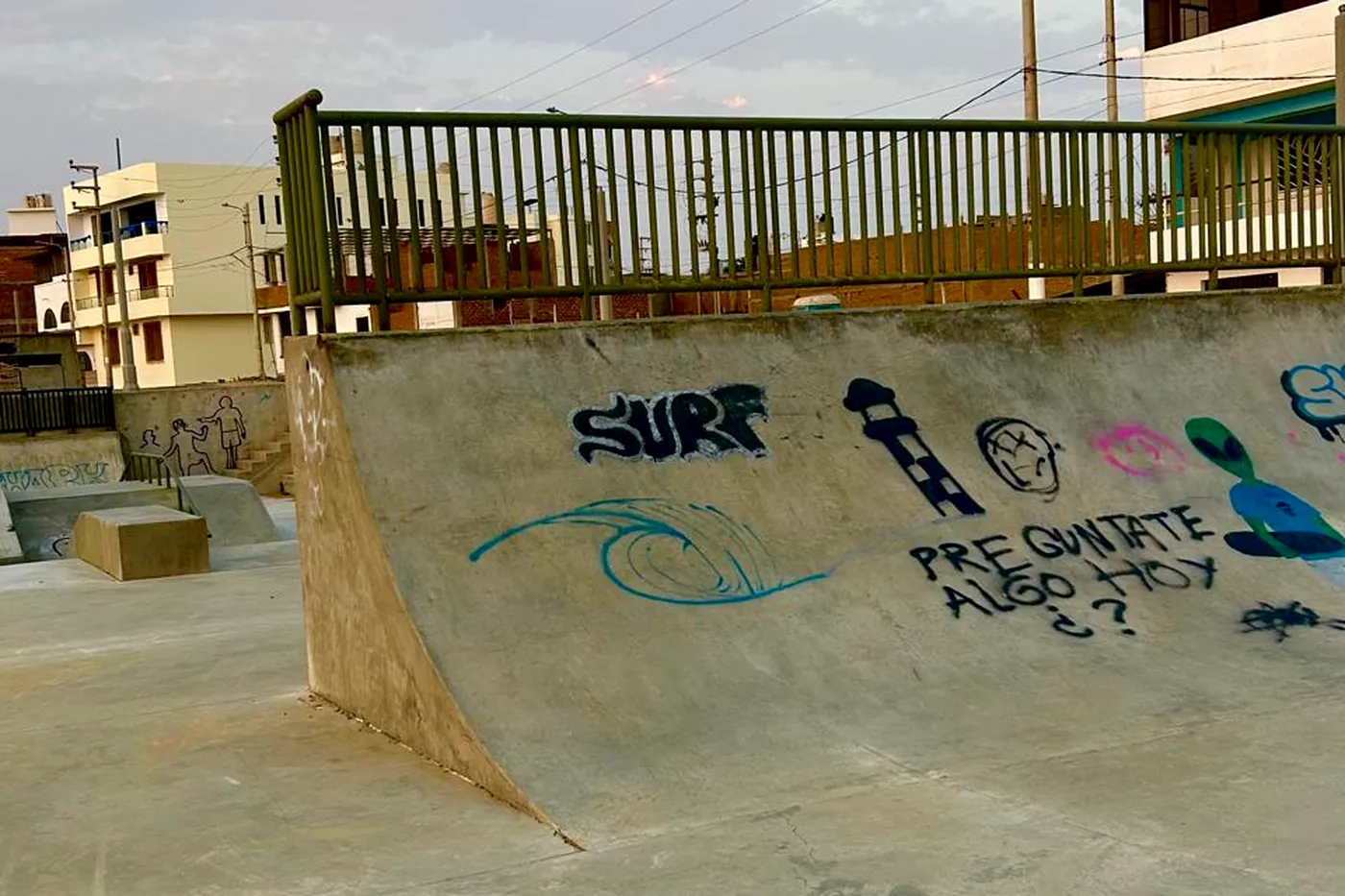
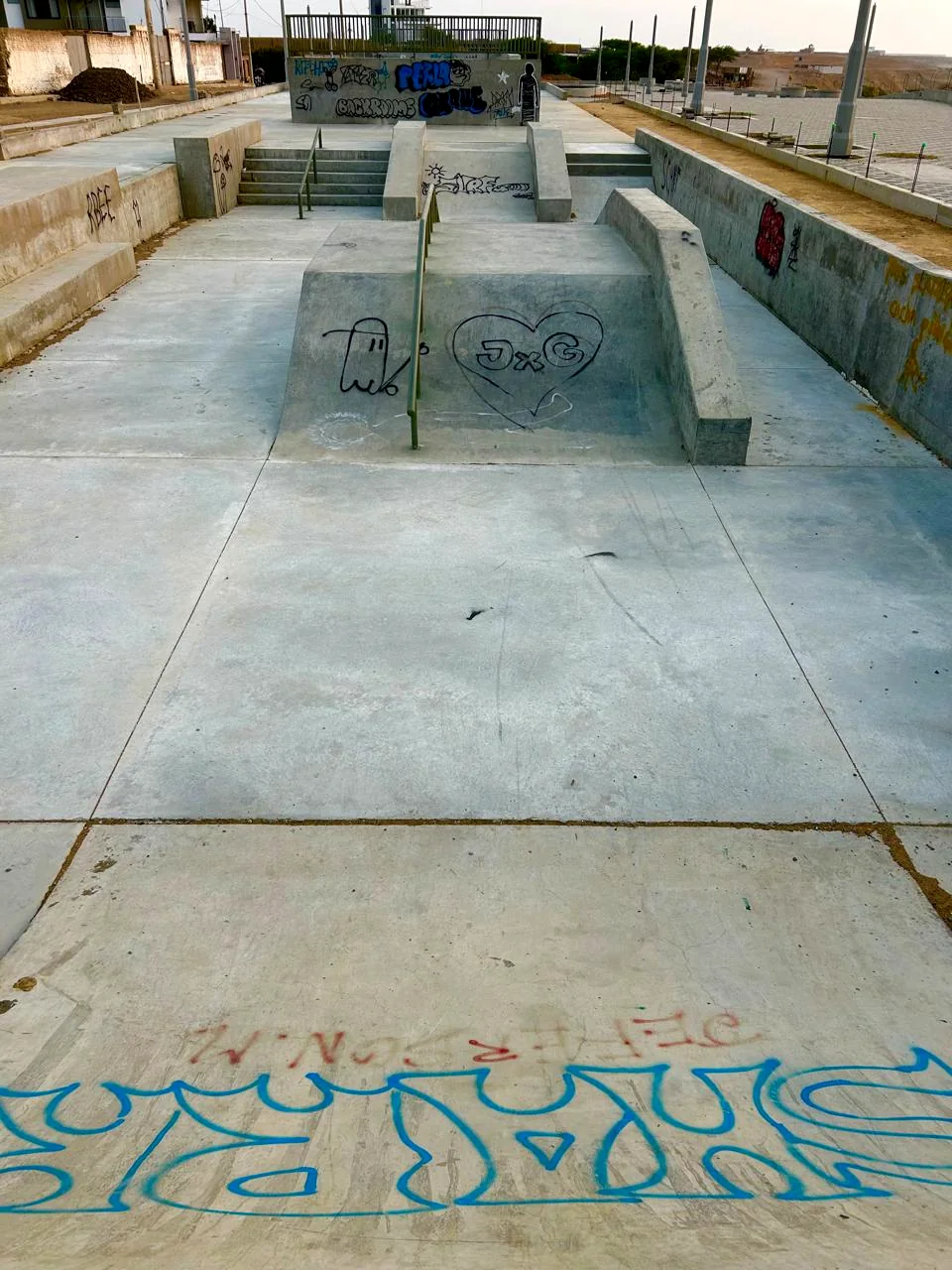
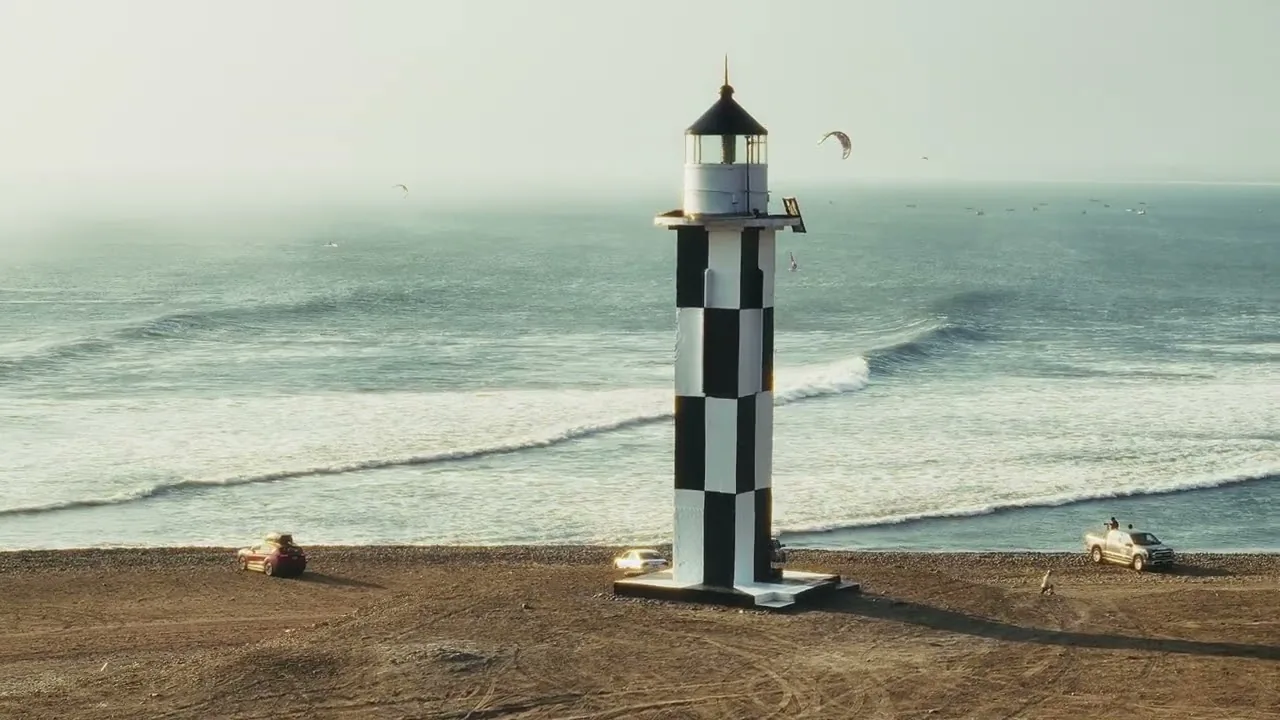
The new seafront leaves the centre and runs straight to the lighthouse: 2.4 km of walkway by the sea, twenty to thirty minutes on foot. At the end there is a skatepark open to anyone, with painted concrete ramps.
It is the sunset walk, and also the way surfers take to El Faro with the board under one arm.
The afternoon show
El Faro: the point known for water sports
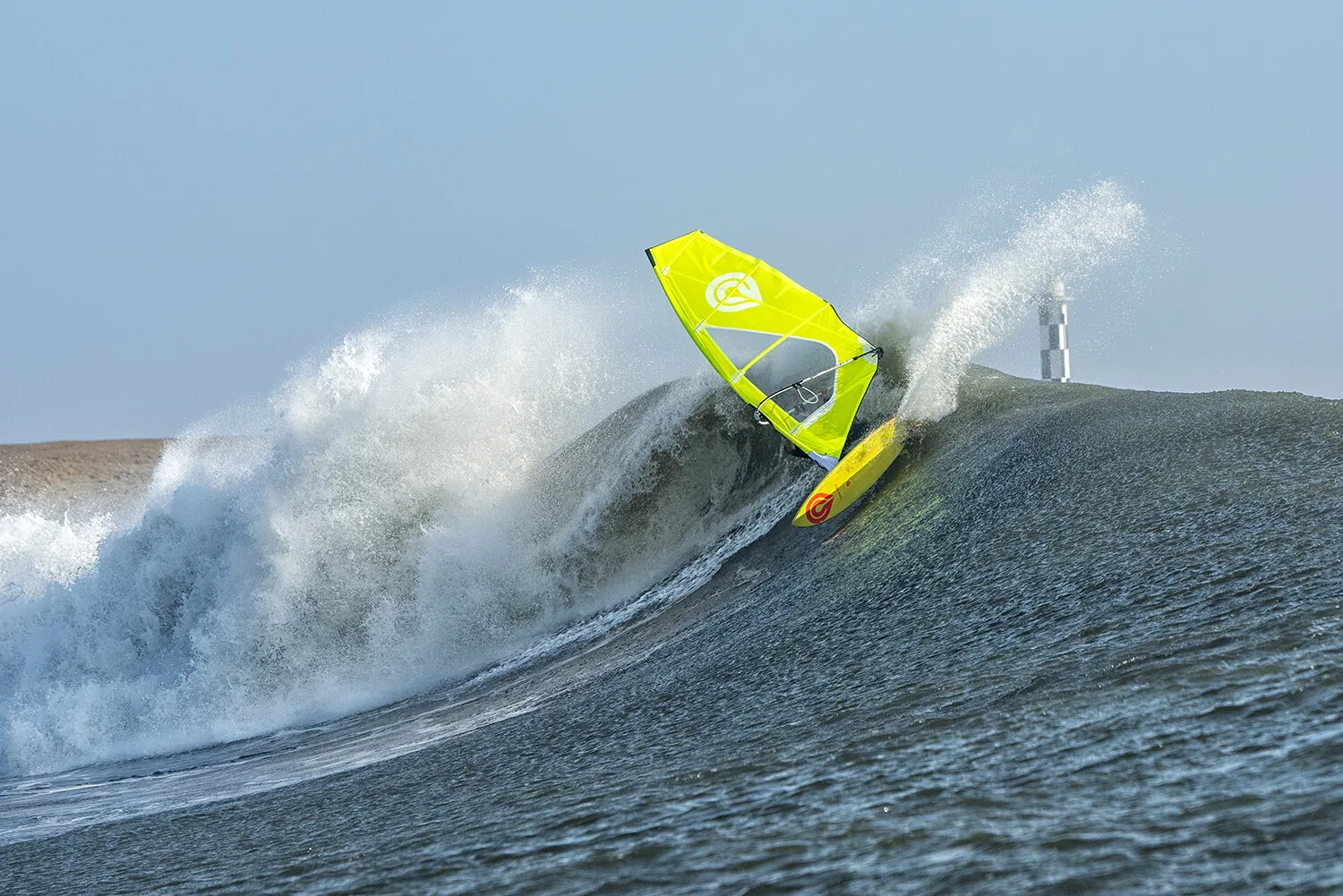
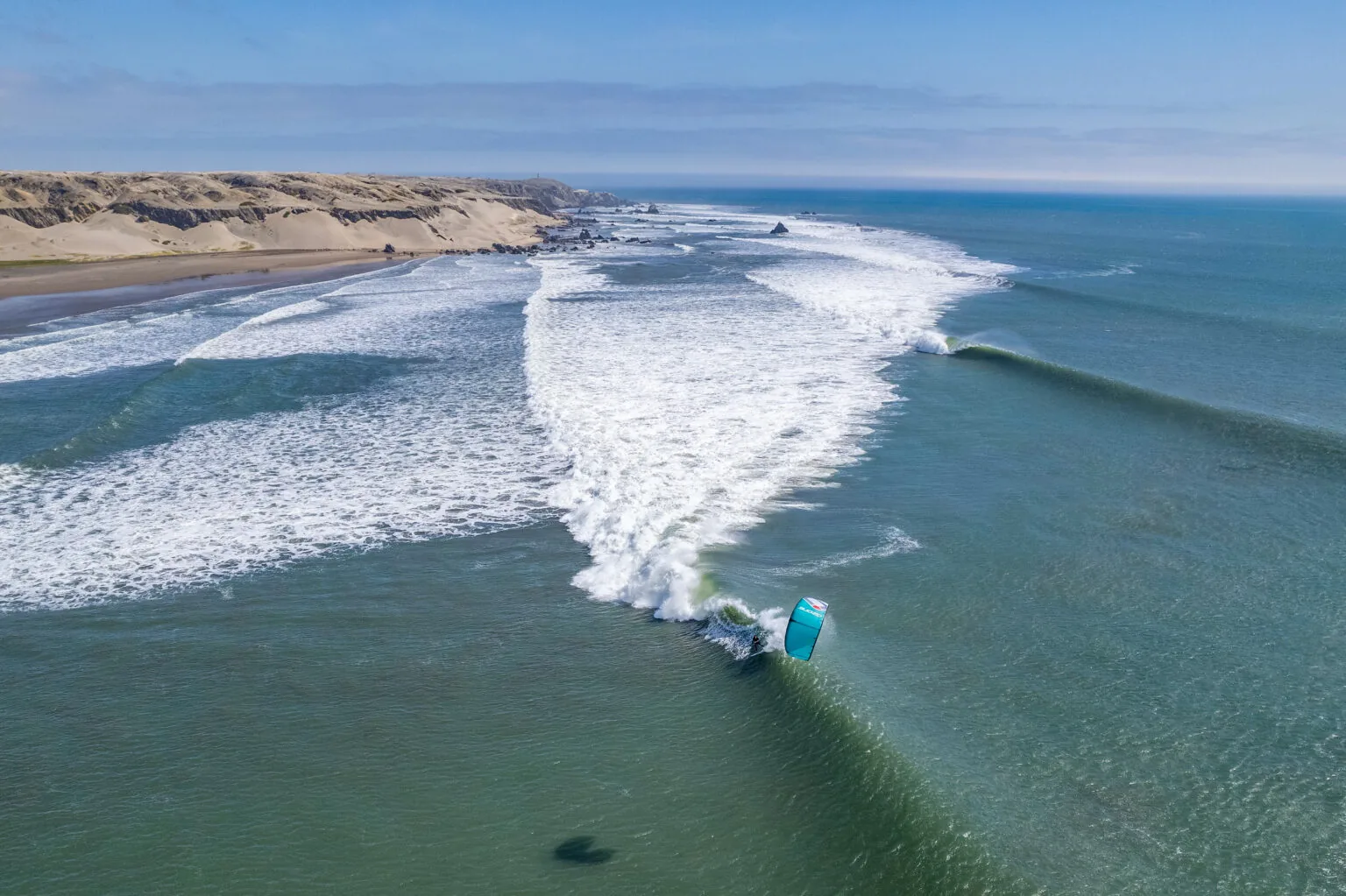
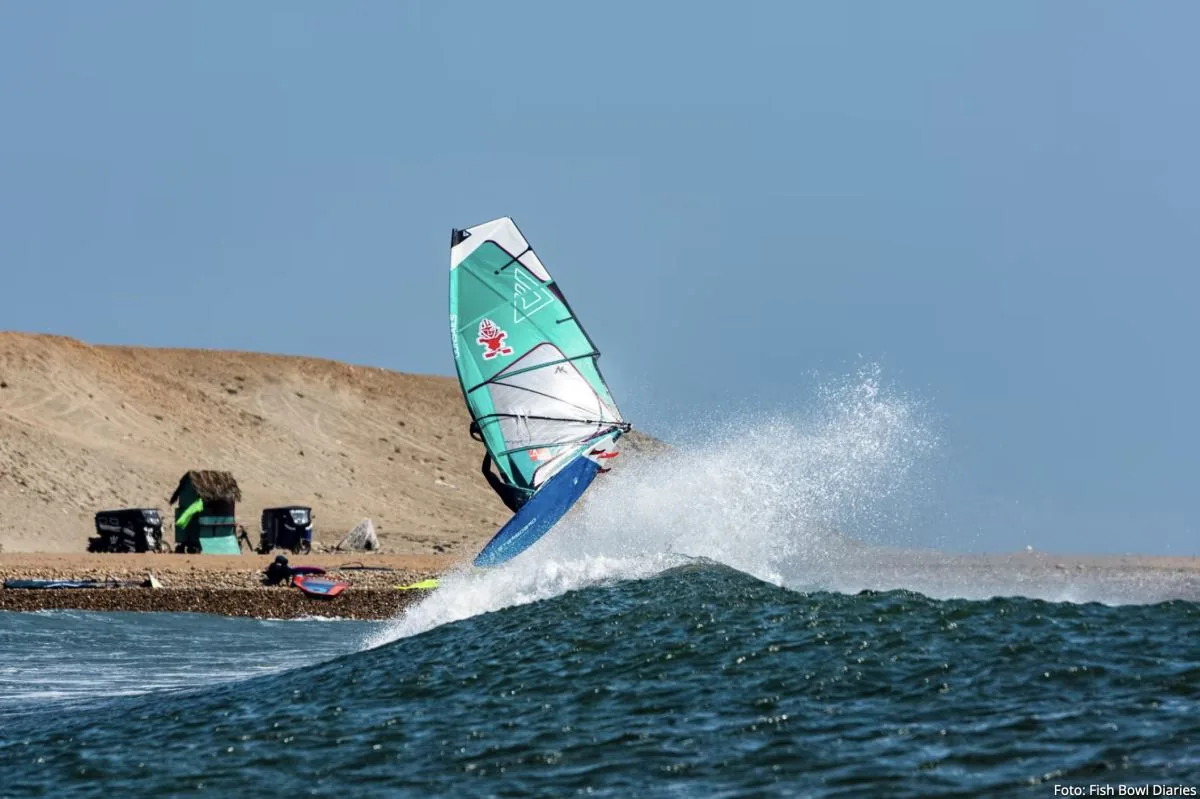
From April to November the wind comes in around midday and blows until the sun goes down. The bay fills with sails and kites, and the seafront becomes the grandstand: this is exactly why Pacasmayo is known among windsurfers and kitesurfers around the world.
You do not need to sail to enjoy it. Walk to the seafront in the middle of the afternoon, pick a spot and watch.
Getting there: 2.4 km on foot along the new seafront, about 33 minutes, or 12 minutes by mototaxi with Tato Surf Trips.
Day trip
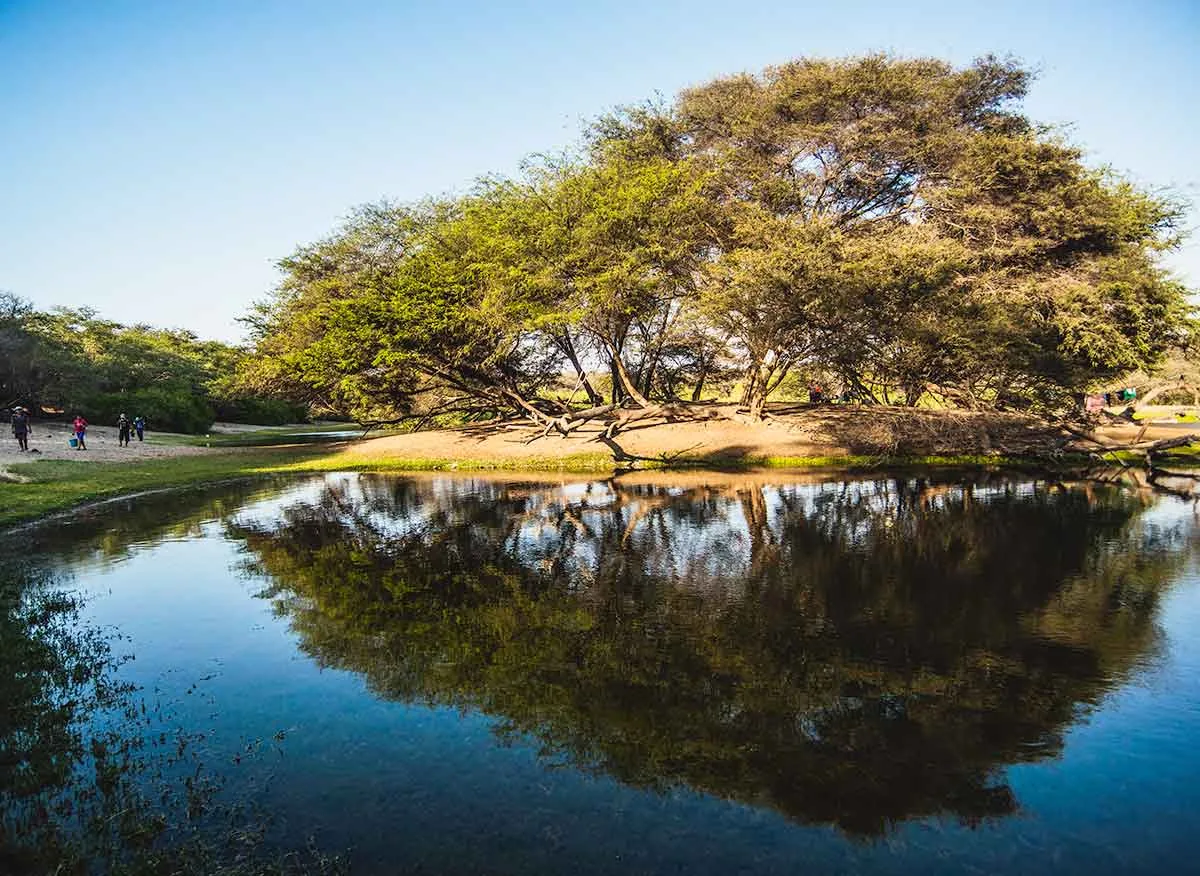
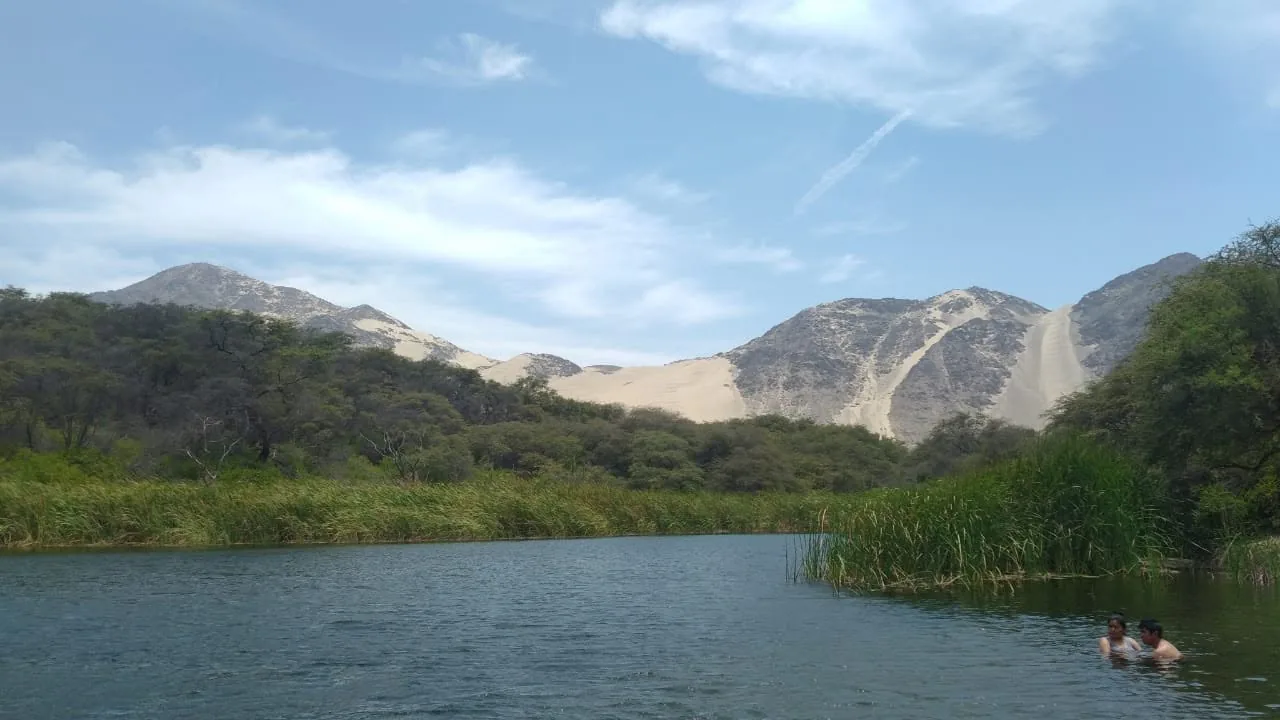
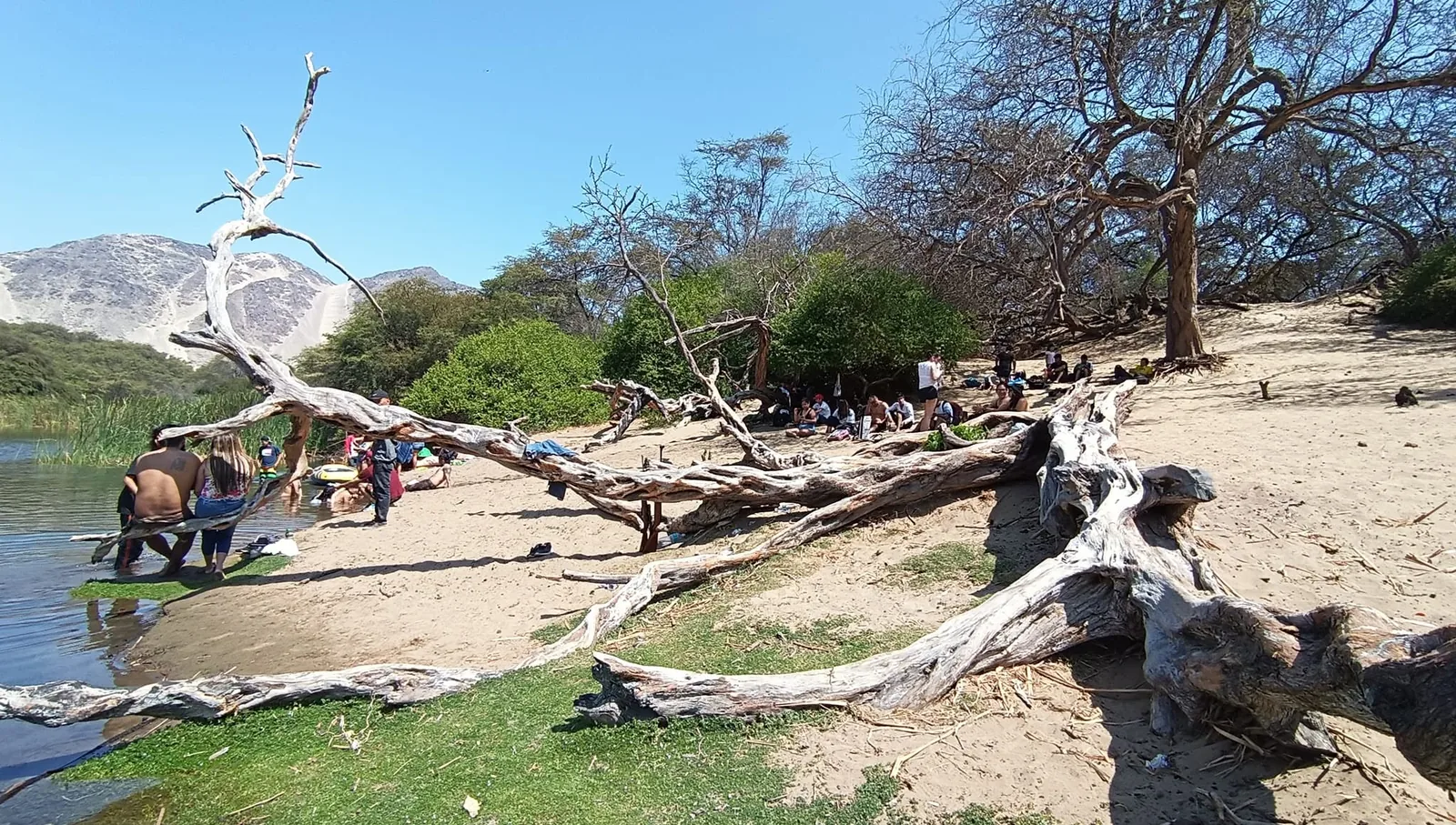
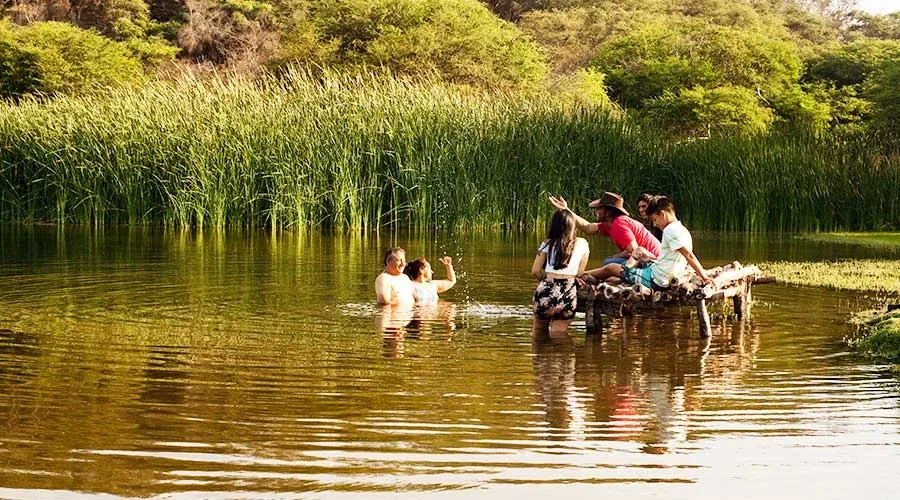
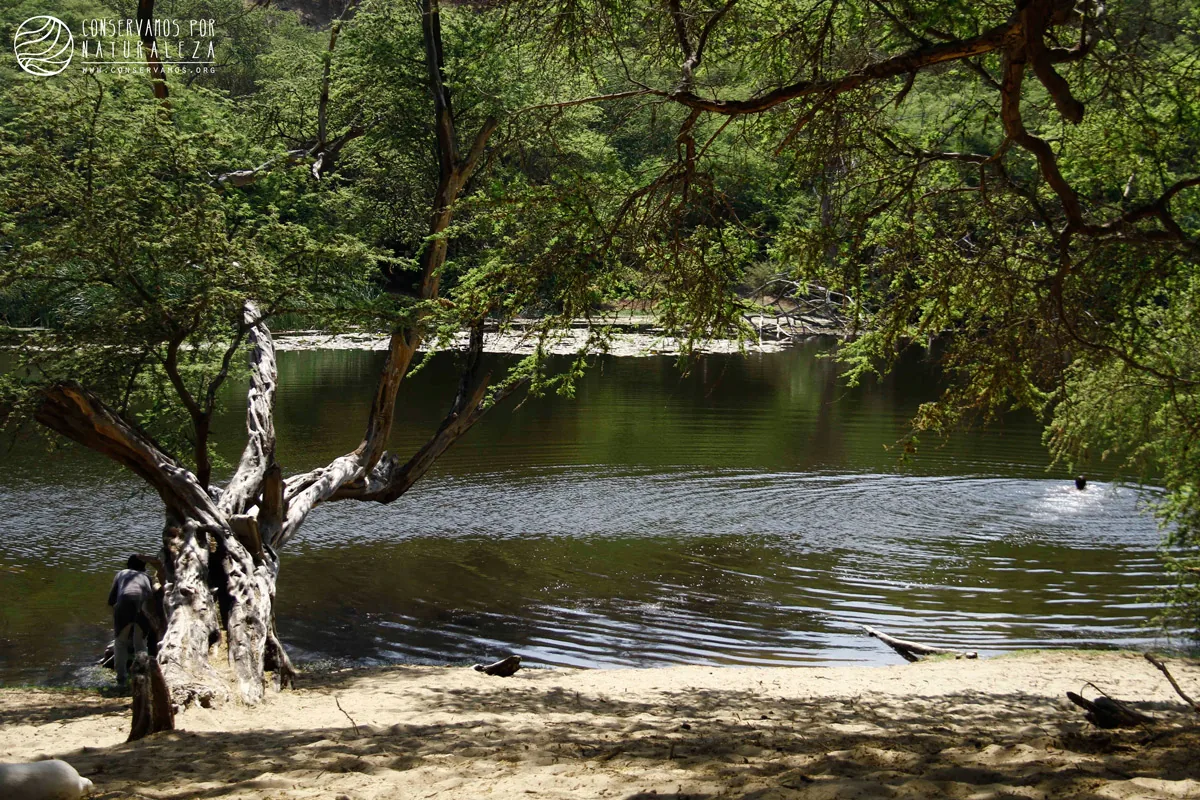
The lagoons of El Cañoncillo
A forest of more than a hundred thousand carob trees with two lagoons, the Gallinazo and La Larga, in the middle of a desert of dunes. A private conservation area of 1,310 hectares, 24 km from the hostel, about 40 minutes up the Panamericana Norte.
July and August are the months with the most water in the lagoons.
Local service
Tato Surf Trips makes the trip by mototaxi, leaving at 6 in the morning and back for lunch. From S/ 70 per trip, for one to three people, price of September 2026.
Book the day trip with TatoDay trips
Four outings, and you come back to sleep here
-
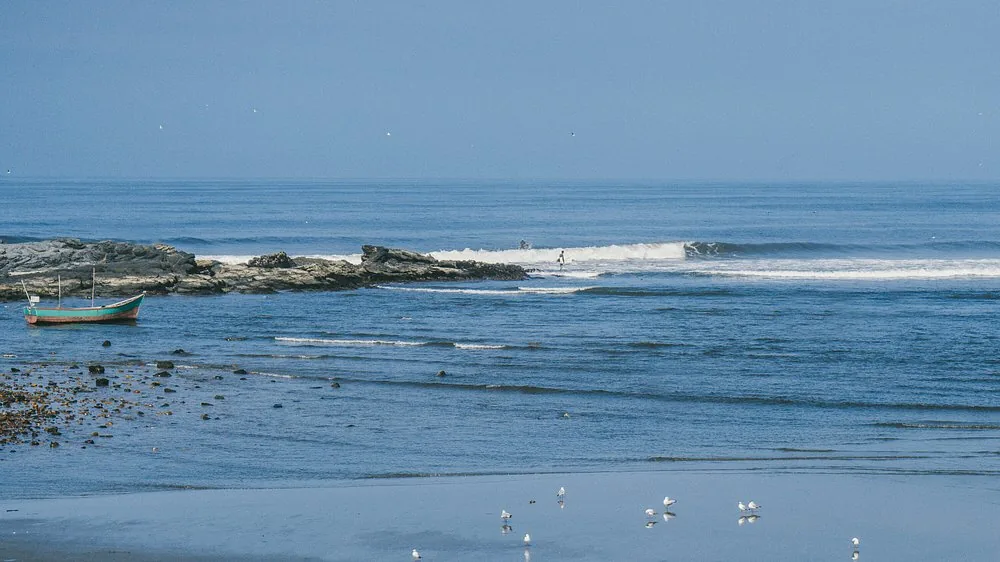
Photo: Tripadvisor 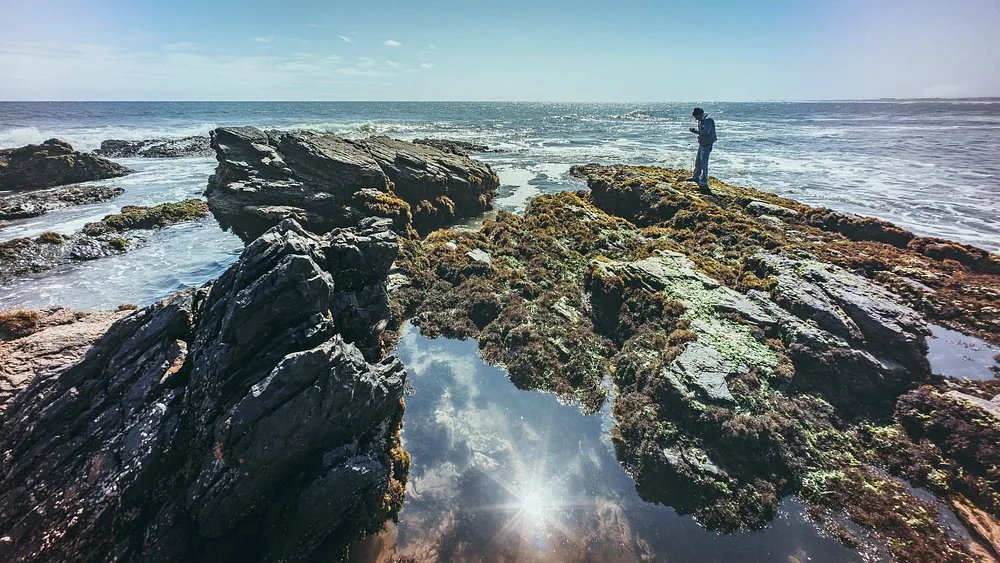
Photo: Tripadvisor 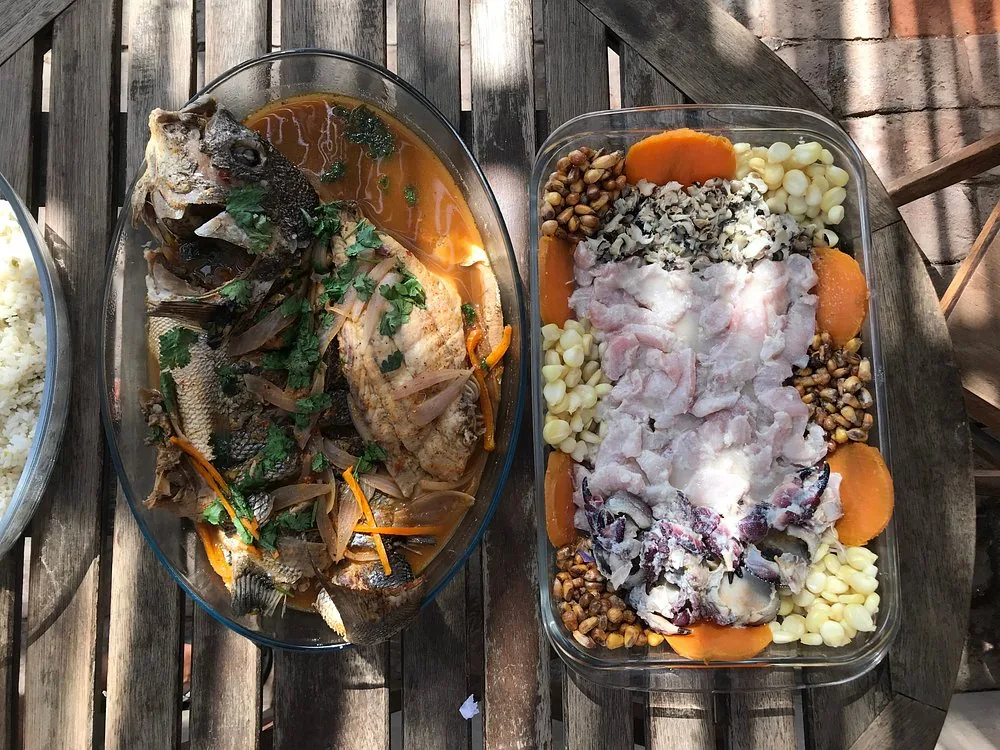
Photo: Tripadvisor 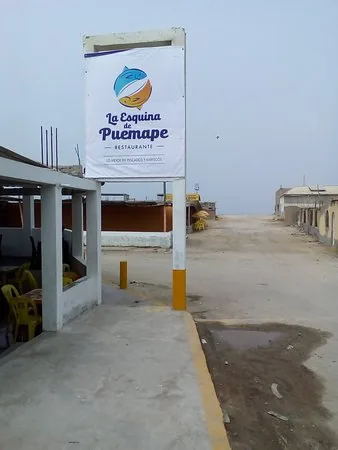
Photo: Tripadvisor Puémape
A cove 22 km south, half an hour down the Panamericana. A sandy beach, rocks with pools and two or three ceviche places facing the sea. It is also a surf spot: the wave is in the surf guide.
Getting there: by mototaxi with Tato Surf Trips.
-
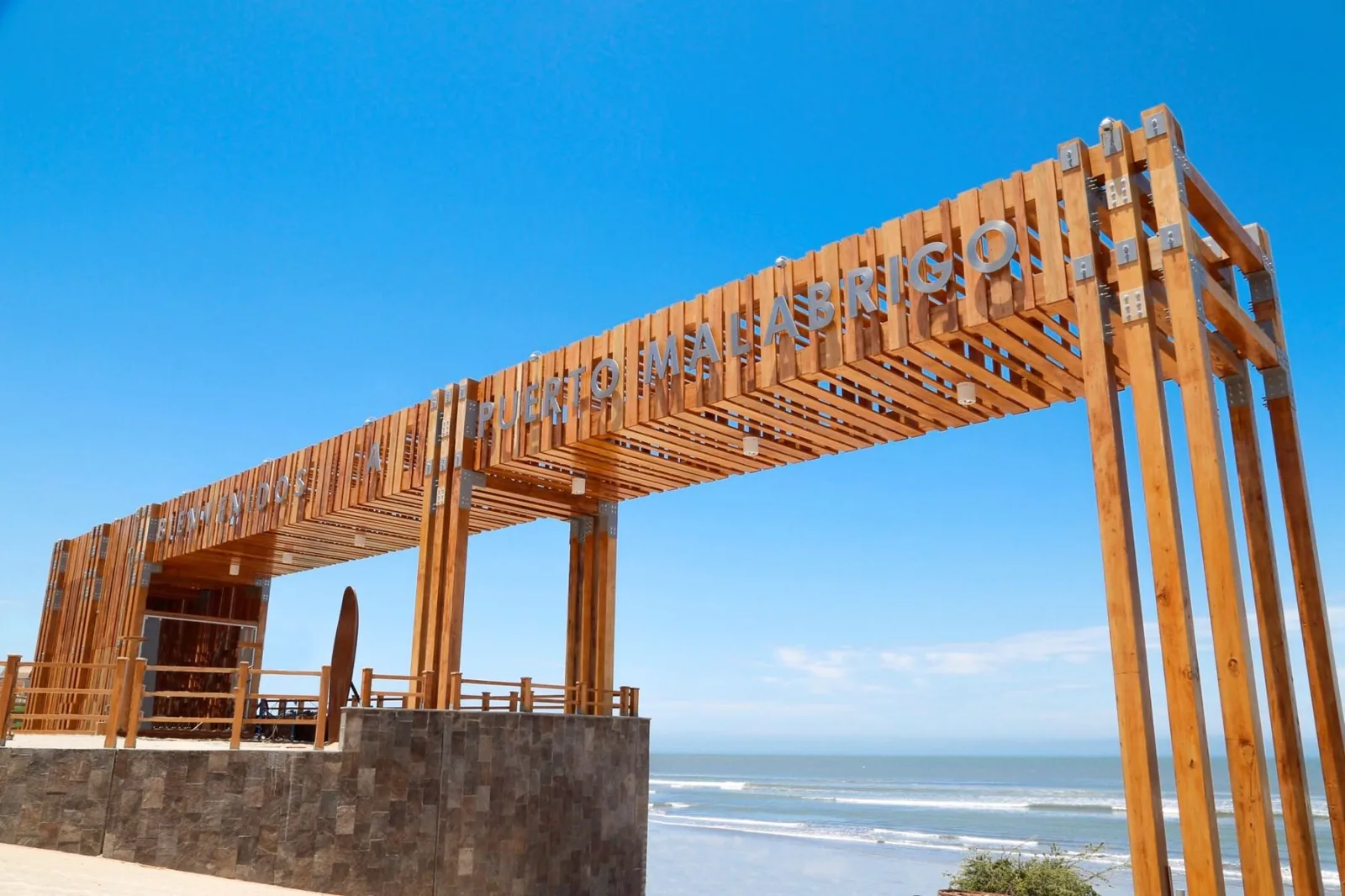
Photo: Andina 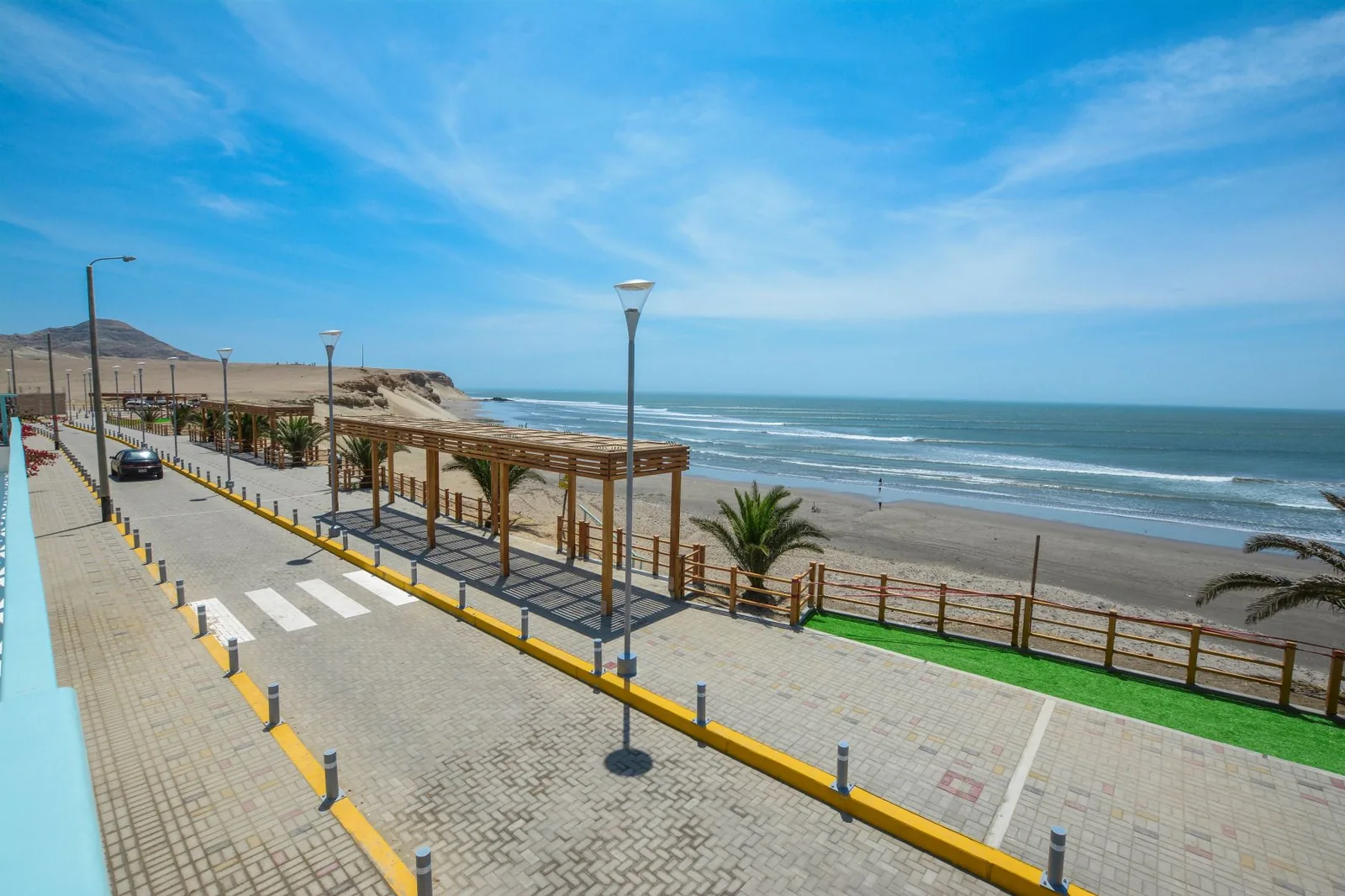
Photo: Andina 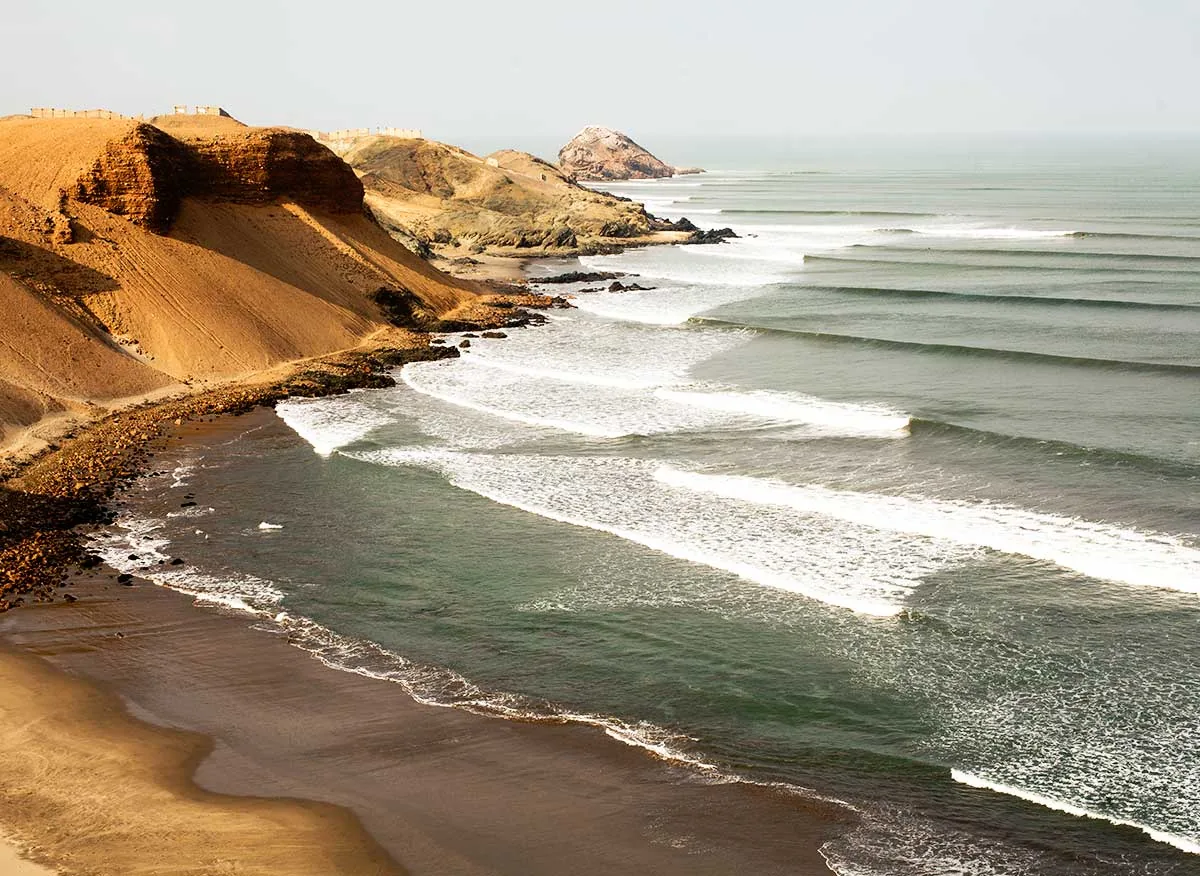
Photo: ytuqueplanes.com 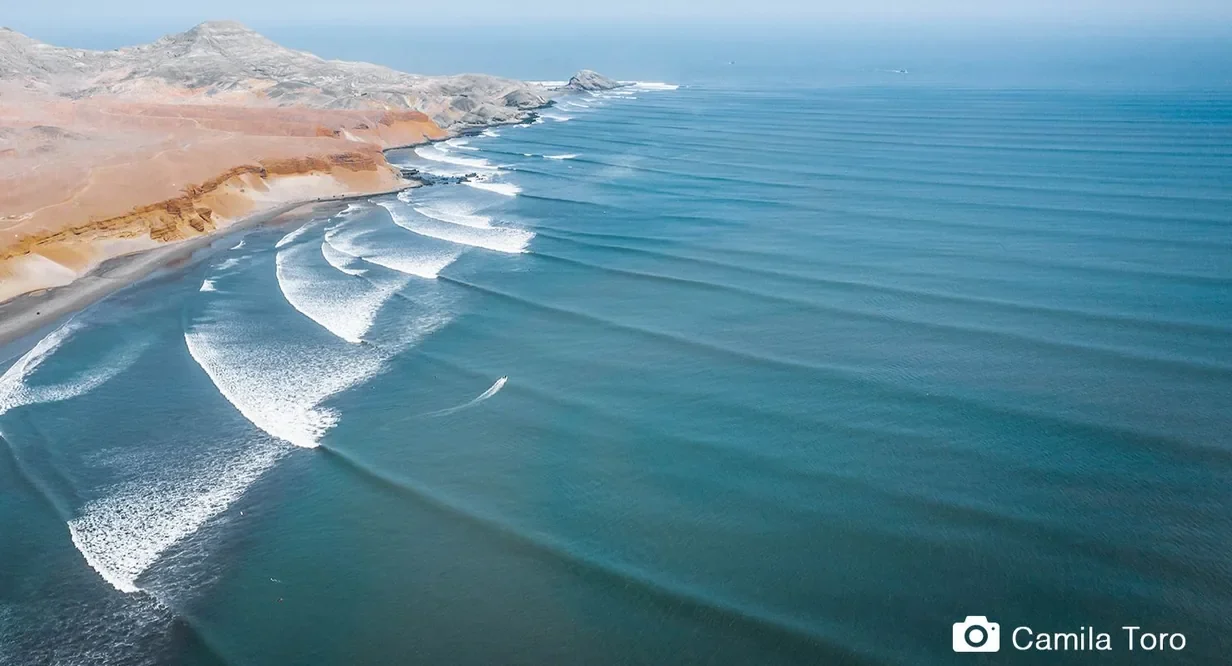
Photo: Camila Toro Chicama
Puerto Malabrigo, 55 km up the Panamericana Norte, about an hour to an hour and a quarter. It opened a new seafront in 2018, with a wooden viewpoint over the beach, and the sand cliffs drop into the sea at the point. The sunset from there is one of the good ones. The wave, in the surf guide.
-
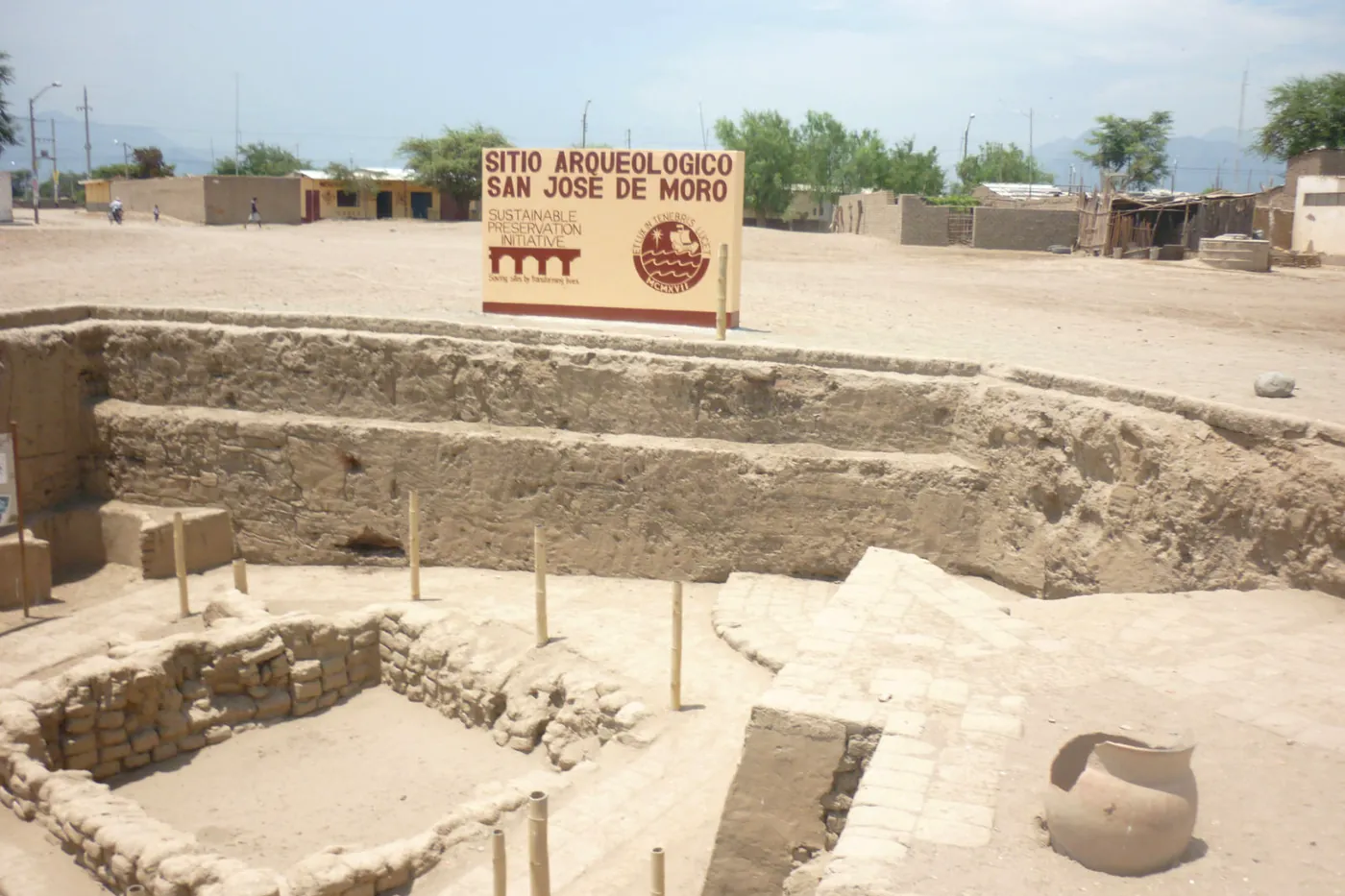
Photo: chepencultural.blogspot.com 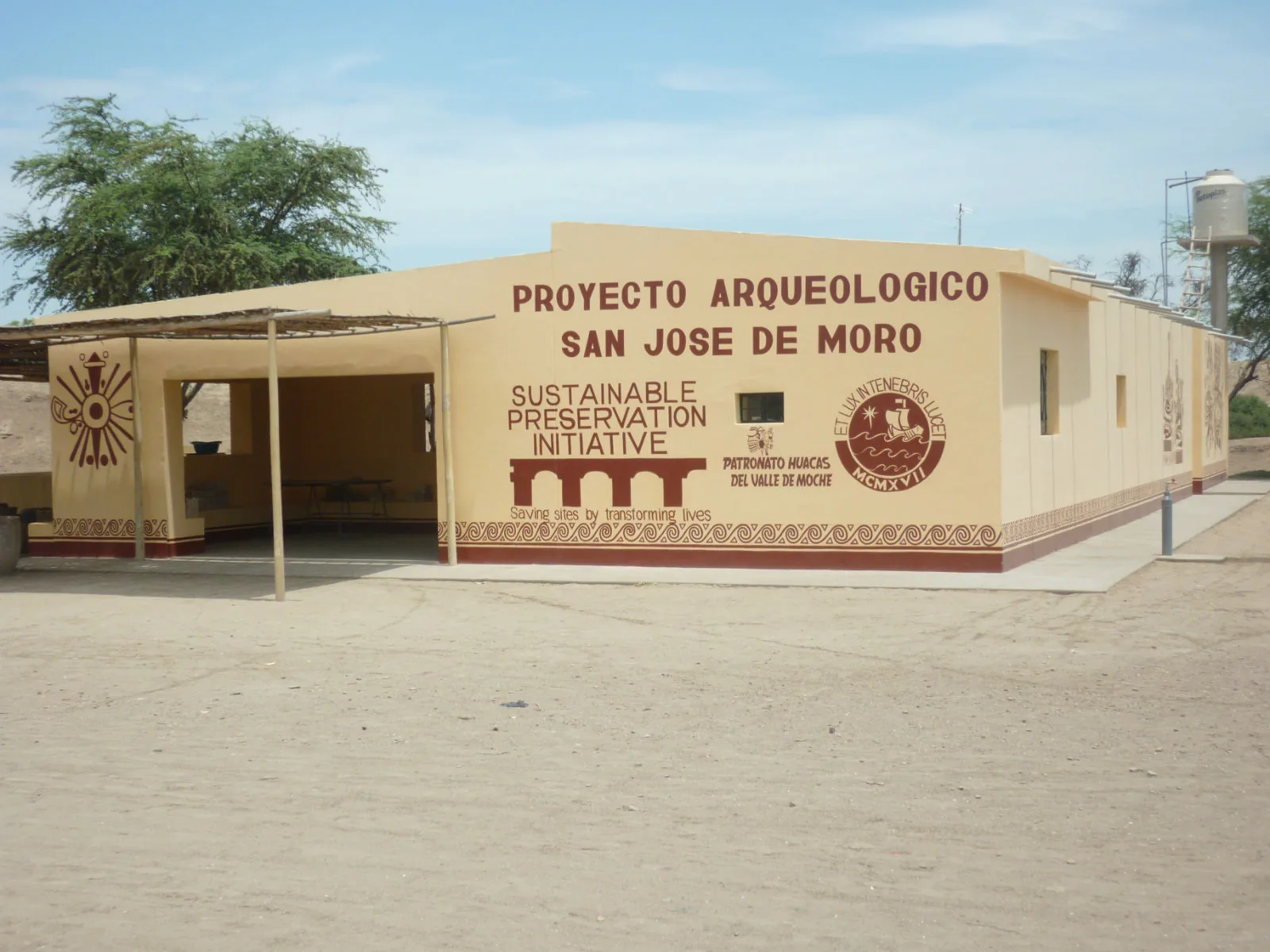
Photo: chepencultural.blogspot.com 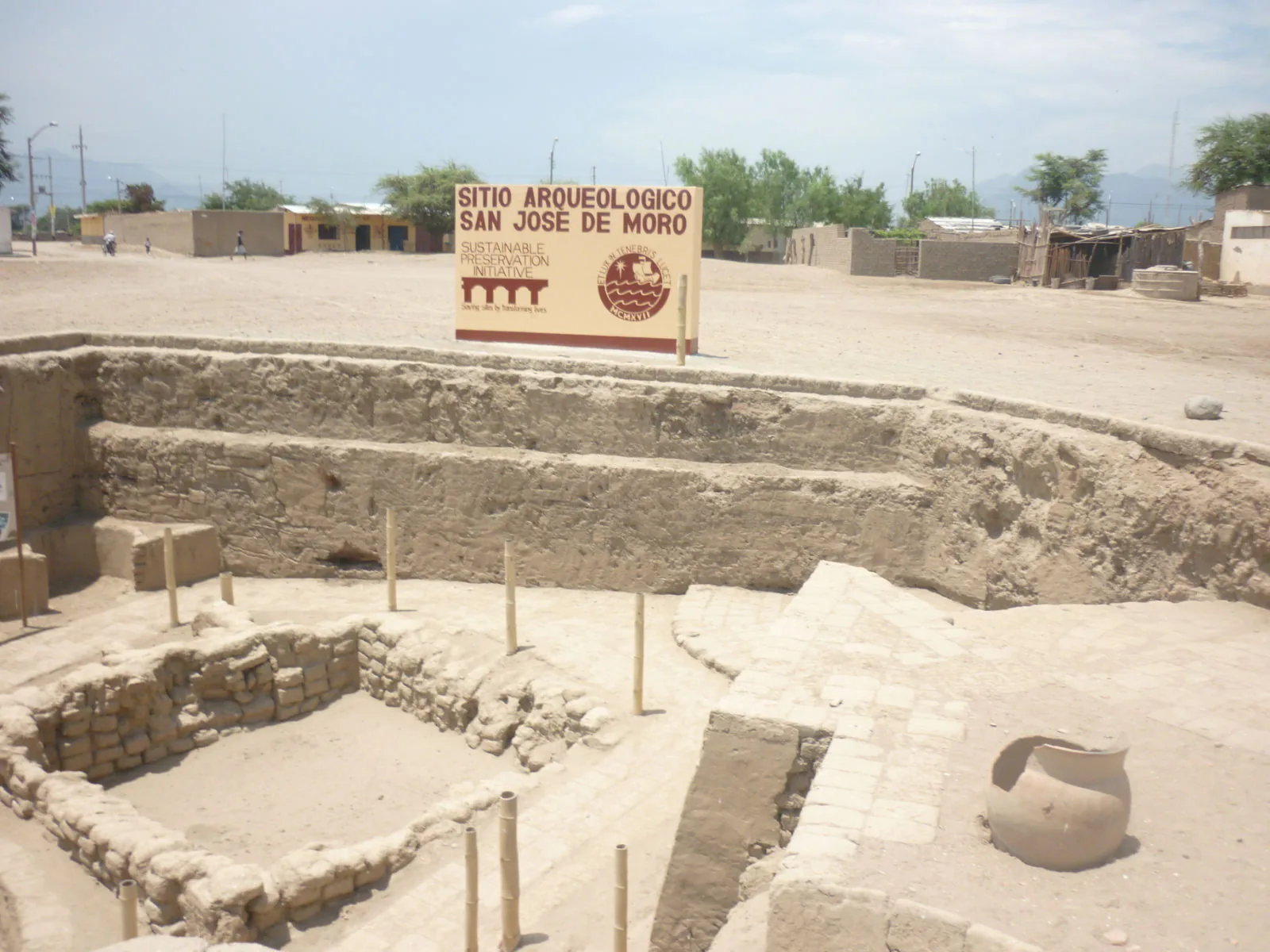
Photo: chepencultural.blogspot.com San José de Moro
A Moche archaeological site in the district of Pacanga, province of Chepén, between kilometres 701 and 704 of the Panamericana. This is where the tombs of the Priestesses of San José de Moro were found, women buried with objects of gold, silver and copper. Open every day from 9 to 17.
-
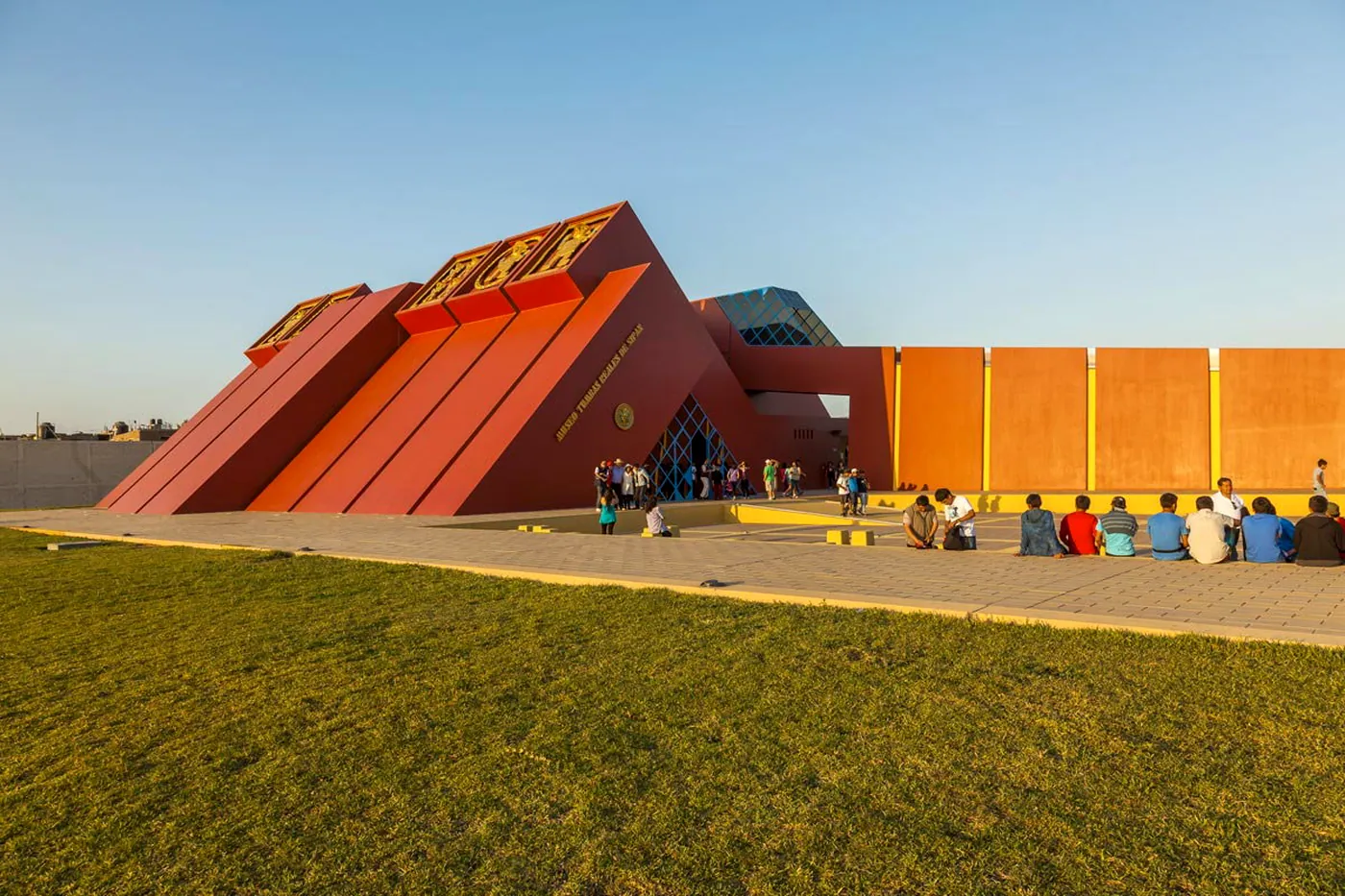
Photo: minube.com 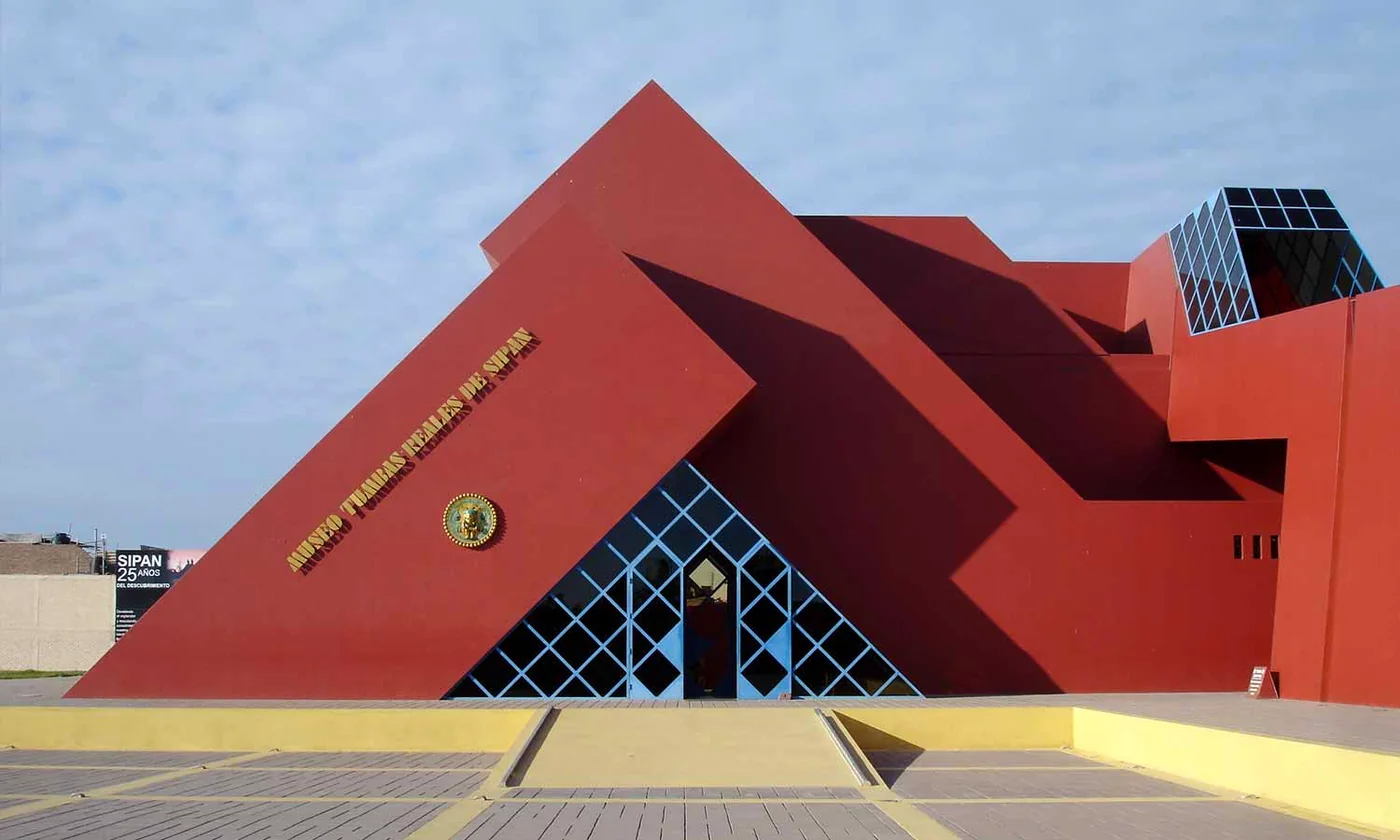
Photo: blog.redbus.pe 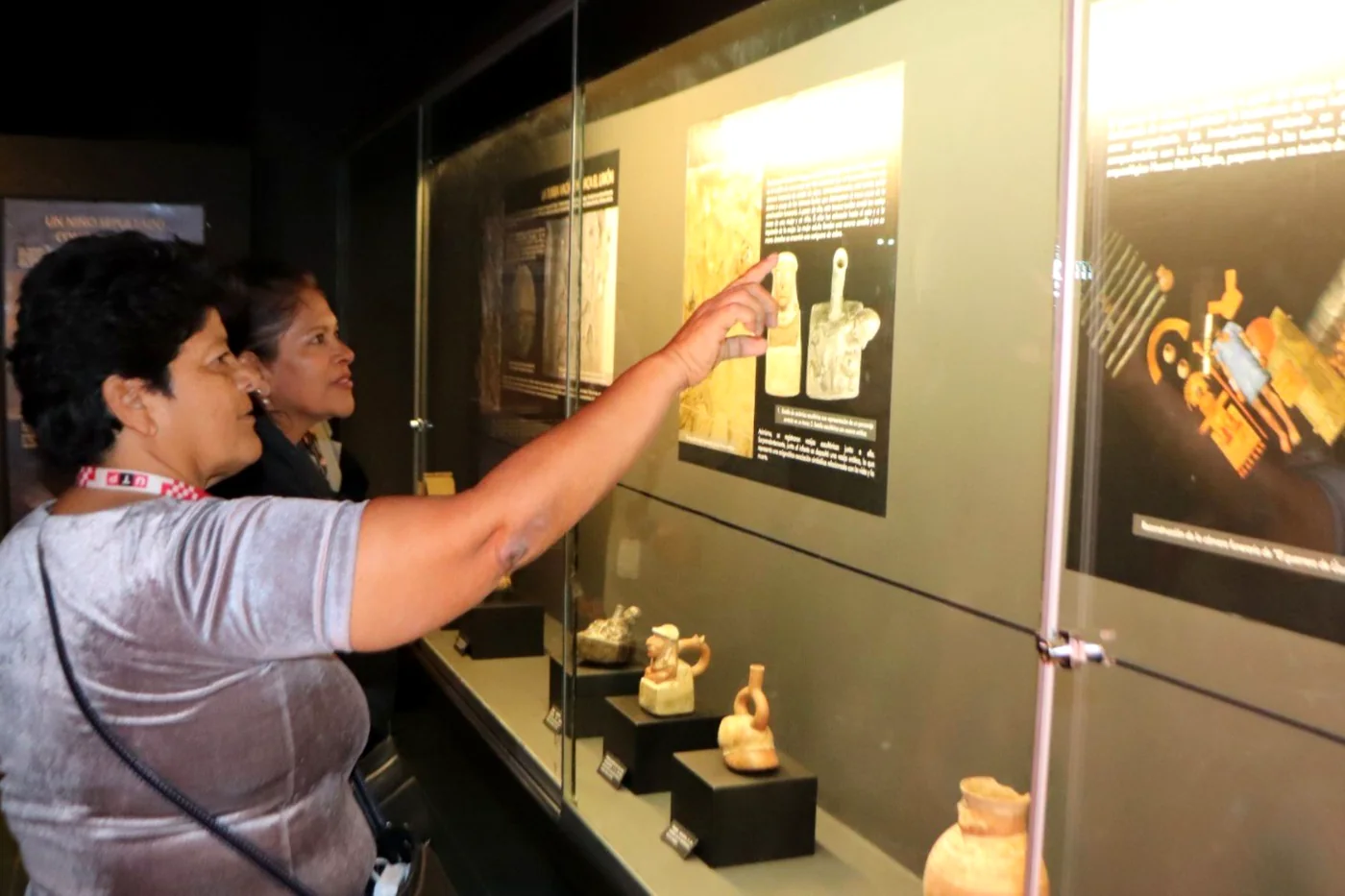
Photo: Andina 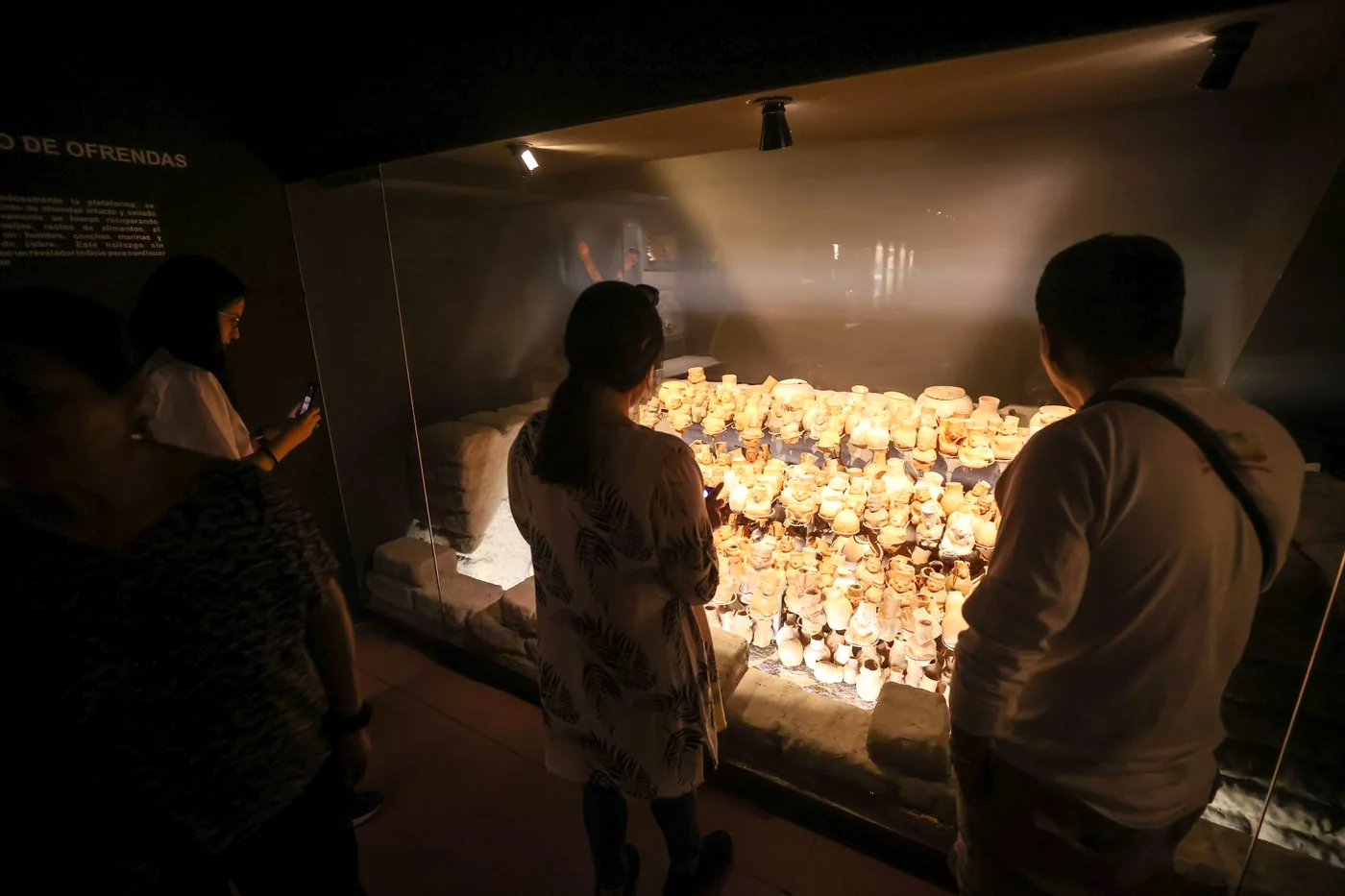
Photo: Andina 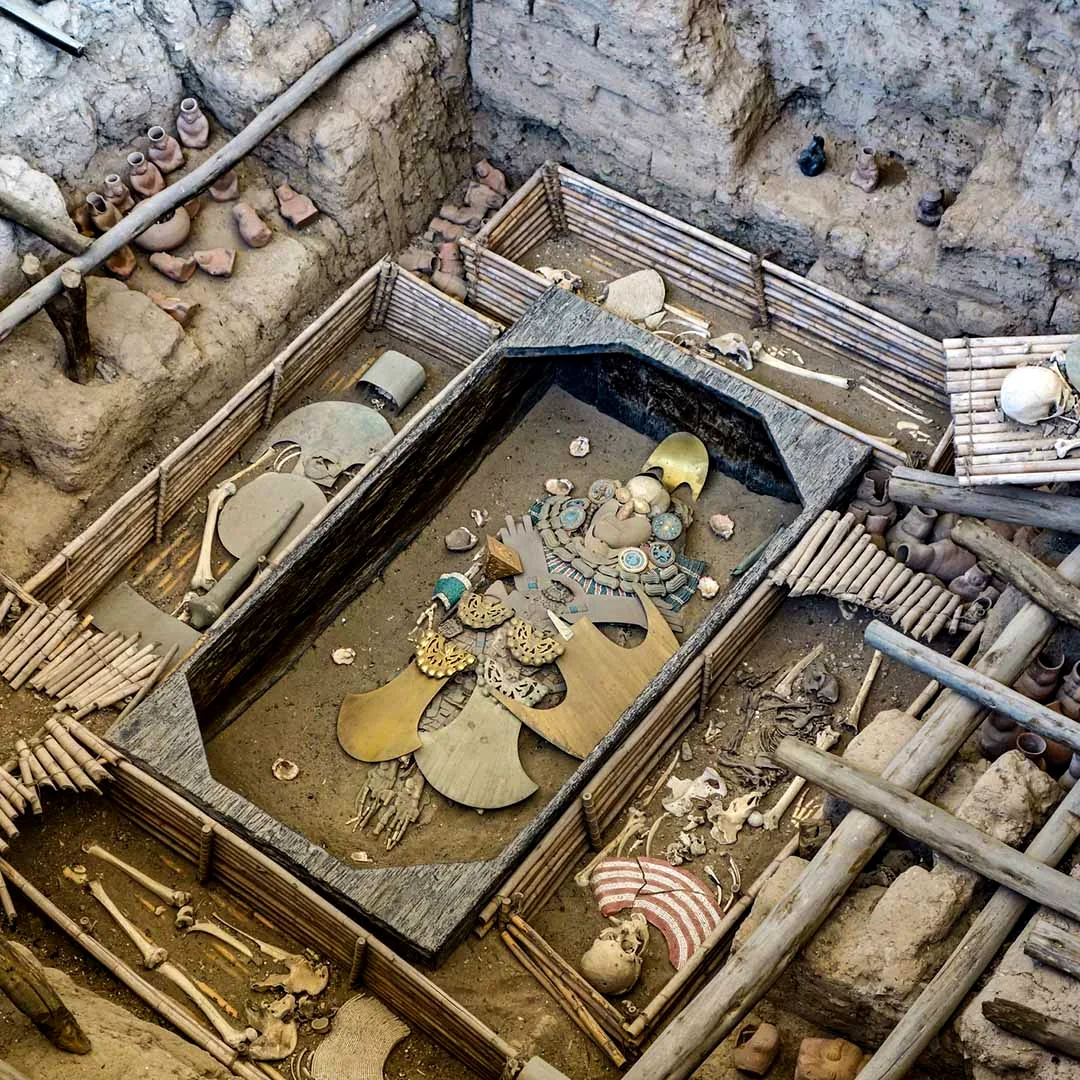
Photo: viajesmachupicchu.travel 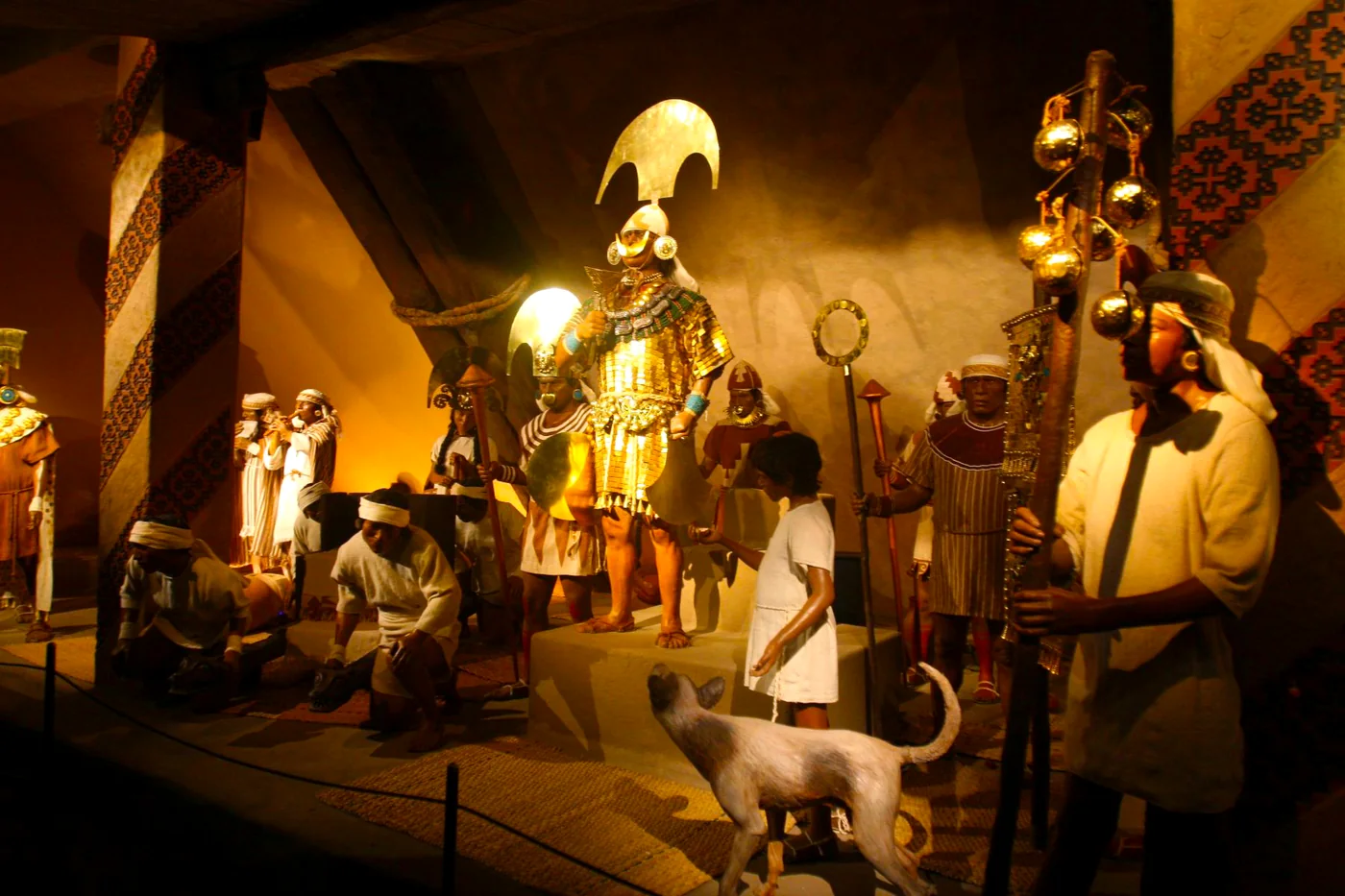
Photo: erasmusu.com 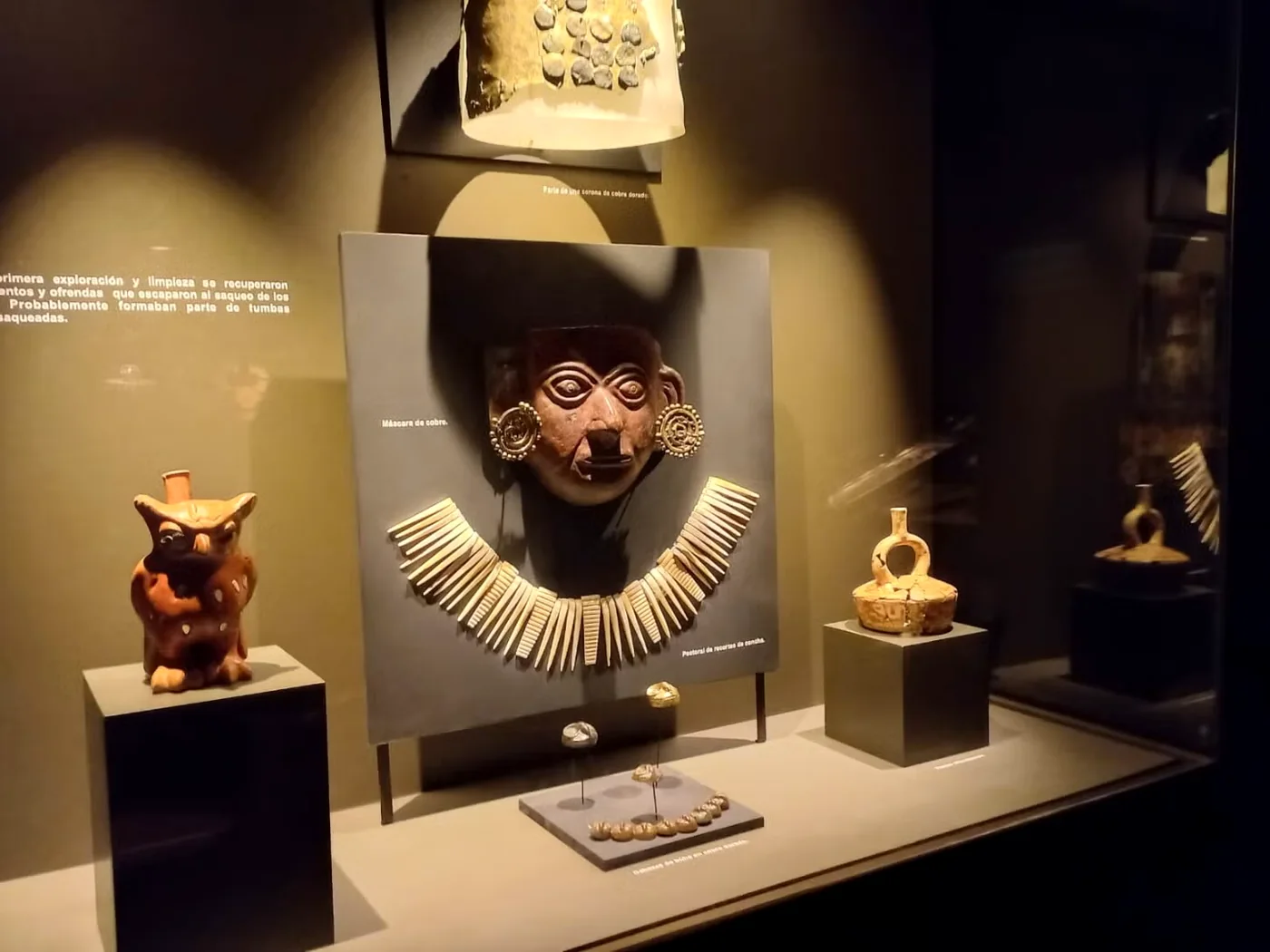
Photo: amlq.org.pe Royal Tombs of Sipán Museum
In Lambayeque, north of Chiclayo. It holds the burial goods of the Lord of Sipán, the most important Moche find in Peru. Open Tuesday to Sunday, 9 to 17, closed on Mondays. General admission S/ 10, free for students and older visitors. Prices of September 2026.
Frequently asked questions
What almost everyone asks
How many days are worth staying?
Four or five, if you want to do what there is: the centre and the market, the beach, the seafront out to the lighthouse, the El Cañoncillo lagoons and a day in Puémape or Chicama. Two days cover the town and little else.
Surfers usually stay two weeks, for a practical reason: the wave at El Faro depends on the swell, and in two weeks several come through. While they wait for the big one, they surf Point Malecón 130 metres from the door, go to Puémape and drive down to Chicama.
Are there waves without leaving the centre?
Yes. The seafront wave breaks in front of the town beach, a block from the hostel. It is not El Faro, but you surf it with no transport and no plan. The El Faro guide is here.
What can you do in a single day out of Pacasmayo?
The El Cañoncillo forest, the San José de Moro archaeological site and the Royal Tombs of Sipán Museum, in Lambayeque. All three are done and you come back to sleep at the hostel.
Can you go to Chicama for the day?
Yes. Puerto Malabrigo is 55 km away, about an hour to an hour and a quarter by car up the Panamericana Norte.
Is Pacasmayo good for windsurfing and kitesurfing?
The town is known for the steady afternoon wind and gets people doing both. The hostel does not offer gear washing or storage, so it is not the right place to stay if you arrive with equipment.
Is there anything to do outside the surf season?
The old centre, the pier, the market and the seafront are there all year, and the Peruvian summer is the town's beach season.